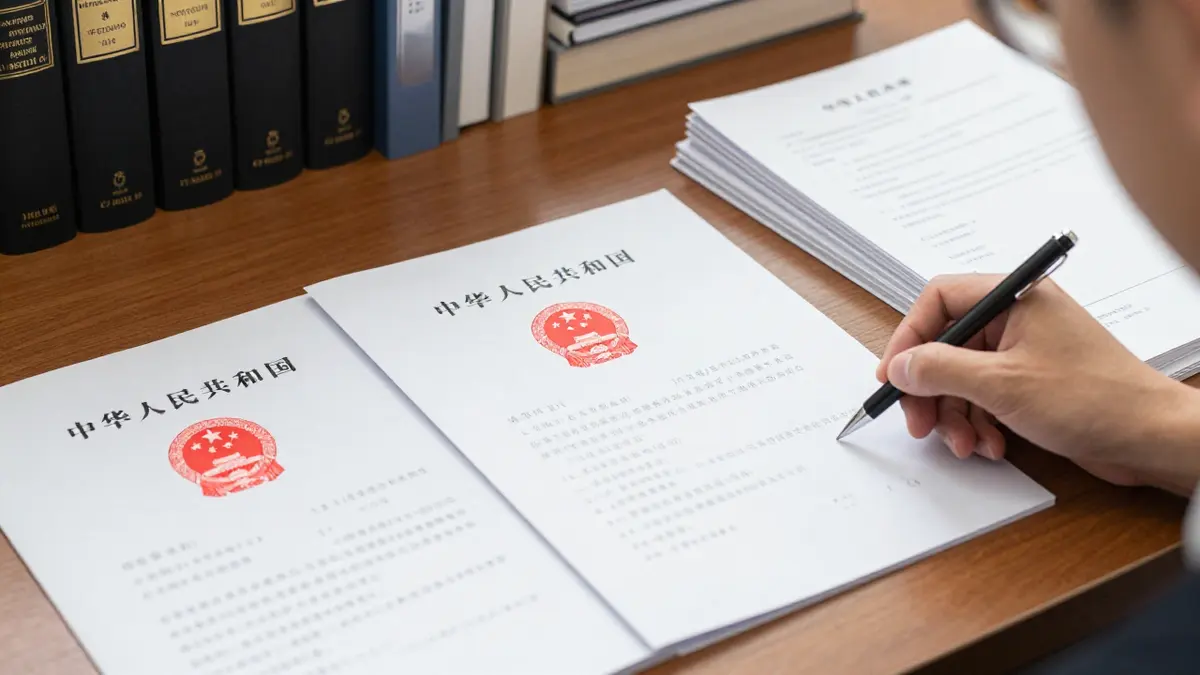

Working from a laptop in China for an employer abroad can look different from taking a job with a Chinese company. Yet immigration rules focus on activities carried out in China, and the national rules do not state a general exemption simply because the employer, payroll, or customers are overseas. The legal result may depend on the person’s status, actual duties, employer arrangement, and where the work is performed.
Before making plans, separate permission to enter or stay from permission to work. China’s Exit and Entry Administration Law requires a work permit and work-type residence permit for foreigners working in China, and it treats work outside a permit’s scope as unlawful employment. The sources cited here do not resolve every offshore remote-work arrangement. This guide offers a fact checklist for seeking an answer from the competent local authorities before travel or before changing work patterns.
Start with the real work arrangement
Write down the facts before asking whether a particular visa is suitable. Include where you will physically perform the work; the legal entity that employs or contracts with you; who pays you; your job title and day-to-day duties; whether you will serve Chinese customers, suppliers, or an affiliate; how long you expect to stay; and whether you will meet clients, negotiate, provide services, or manage staff while in China. “Working remotely” can describe different arrangements, so a short label may leave out facts that determine the answer.
Also identify your immigration status precisely: visa category and conditions, visa-free entry basis if applicable, residence-permit type and expiry date, and any work permit or employer-specific authorization already held. A residence document permits stay for its stated purpose and period; it does not by itself answer whether a separate work authorization is required.
What the national rules say
Article 41 of the Exit and Entry Administration Law states that foreigners working in China must obtain a work permit and a work-type residence permit under the applicable rules. Article 43 treats working without those documents, or working beyond the scope specified in a work permit, as unlawful employment. Article 37 separately requires a foreigner’s activities in China to be consistent with the reason for stay or residence.
The 2017-revised Regulations on the Administration of Employment of Foreigners in China define employment as engaging in social labor and receiving remuneration within China. These texts do not create a general exception based solely on the employer being abroad, the salary being paid abroad, or the work being done online. That is a cautious reading of the statutory language, not a definitive ruling on every remote-work fact pattern. The employing entity, work activities, and individual status should be assessed together.
Do not infer work permission from a visit or residence label
A business-visit visa, visa-free entry, or a residence document issued for a non-work purpose does not on its own establish that every activity performed from China is authorized. Conversely, the sources cited here do not establish that every occasional online task for an overseas employer is automatically unlawful. Avoid relying on either assumption. Ask the authorities how the described activity fits the person’s actual entry and residence purpose and the work-permit rules.
If you already hold a work permit, check its employer, job, and permitted scope. Article 43 specifically addresses work outside that scope. A move to a different employer or a material change in duties may therefore require an update or new authorization before the change takes effect. Do not begin work for a different entity based only on a pending application or a general visa.
Ask the right authority with complete facts
Before travel or a change in work pattern, contact the work-permit service authority for the locality where you will be based and the local public-security exit-entry administration responsible for the intended stay or residence document. The 2024 government guide for foreign business visitors describes work-permit applications through the employer and local foreigner-work service windows, while visa and residence matters are handled through the relevant consular or exit-entry channels.
Provide the proposed contract or assignment letter, employer’s legal name and country, job description, work location, expected dates, clients or affiliates served, payment arrangement, and current immigration documents. Ask specifically: whether the activities require a work permit; whether a China-based entity must act as employer or sponsor; which visa or residence status fits the plan; what application must be approved before work starts; and how a change in employer, role, city, or duration should be handled. Keep the written response and application records.
Recheck when the facts change
- A short visit becomes an extended stay or a regular work pattern.
- You begin serving a China-based affiliate, customer, or project rather than only an overseas team.
- Your employer, contractual counterparty, role, or work location changes.
- Your visa or residence document is renewed, replaced, or close to expiry.
- You are asked to attend meetings, supervise local staff, deliver services, or sign documents in China.
Immigration permission is tied to documented purpose and individual facts. If the answer is unclear, obtain advice from qualified China immigration counsel and the competent authorities before performing the work in China. Do not treat a pending inquiry as authorization to work or stay beyond the period shown on your current documents.