
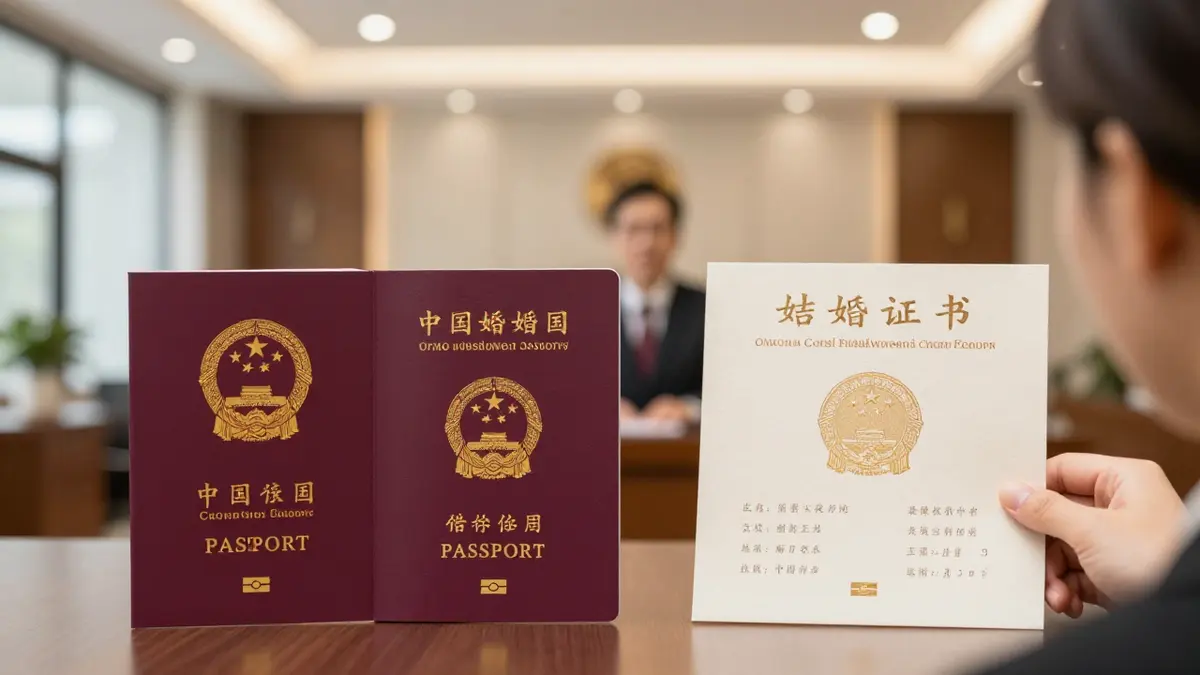
When one spouse is a foreign national or the couple has lived in more than one country, a China marriage or divorce matter can involve separate questions about registration, court jurisdiction, documents, and assets. The correct first step depends on the parties' status and where the relevant event took place. A checklist prepared for one couple may not fit another.
China's marriage registration rules were revised in 2025. Before booking an appointment or signing an agreement, confirm the current requirements with the responsible registration authority and keep the original marriage, identity, residence, and family records. A registration procedure does not by itself resolve every cross-border issue, such as parenting arrangements, overseas assets, or recognition of a foreign judgment.
Identify the route before collecting documents
The revised Marriage Registration Regulation distinguishes ordinary mainland registration from registration involving a foreign national, Hong Kong, Macao, Taiwan, or an overseas Chinese party. The designated authority and proof requirements can differ. Ask the authority that will handle the application for its current checklist, including identity documents, proof of marital status, translations, and any formalities for foreign records.
For divorce, separate an agreed administrative route from a court proceeding. A court case may be needed if one spouse does not consent, the parties cannot resolve parenting or property issues, or the registration route is not available. Cross-border facts can raise jurisdiction, service, interpretation, and evidence questions. Do not assume that starting a process in one country automatically resolves a case or asset issue in another.
Build a usable family and financial record
Organize the marriage certificate, passports or identity records, current addresses, children's birth and school records, and any prior agreements or court papers. Prepare a dated list of where the spouses lived, where the marriage was registered, and any current or earlier proceedings. For finances, list assets, debts, income, and accounts by location and record whose name appears on each item. Preserve source documents and avoid transferring or concealing property while a dispute is developing.
Check parenting and property terms separately
An agreement should state what the parties have decided and how practical arrangements will work. For children, consider the regular schedule, school and medical decisions, travel documents, contact across borders, and what happens if a parent relocates. For property, distinguish ownership evidence from a proposal about division and identify any assets governed by foreign records. Translation and signing requirements should be confirmed before the parties rely on a document in another forum.
Before filing or signing
- Confirm the responsible registration office and its current document list.
- Check whether foreign certificates need translation, notarization, apostille, or another authentication step.
- Identify any pending or completed foreign proceedings and obtain complete copies.
- Write down unresolved issues about children, support, property, and liabilities.
- Get advice on jurisdiction and recognition before starting parallel proceedings or signing a final settlement.
Sources: 2025 Marriage Registration Regulation, National Administrative Regulations Database; Civil Code, Supreme People's Court.