
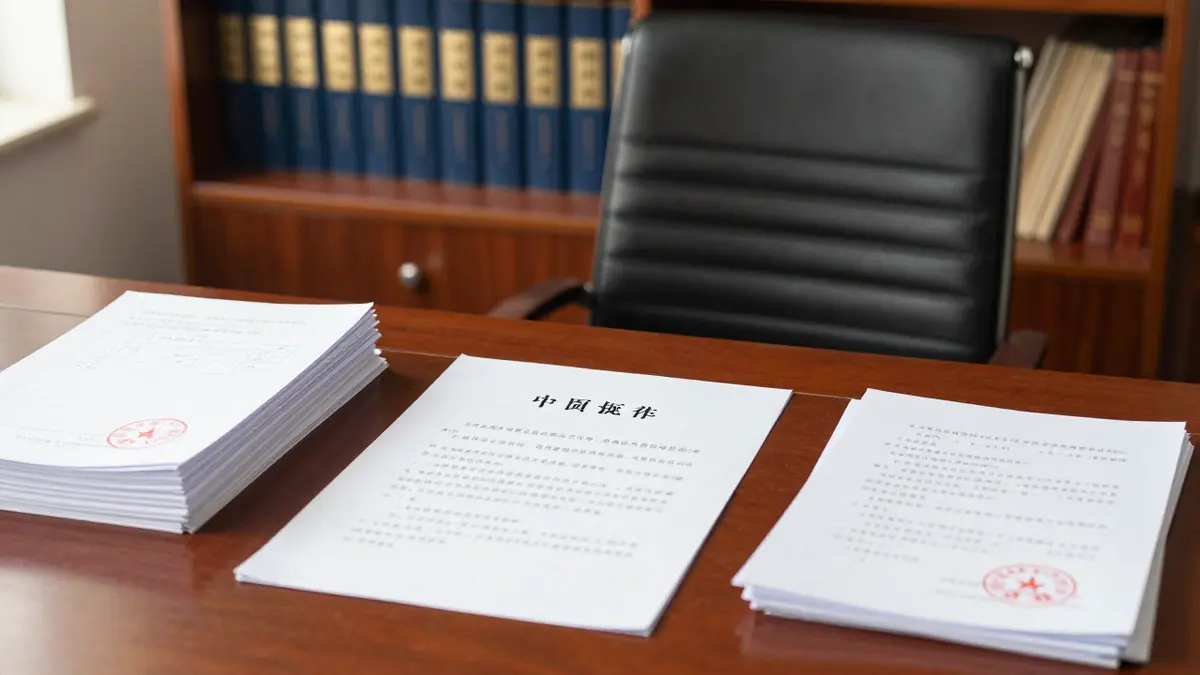
Criminal bail in China operates differently from common law jurisdictions. Under the Criminal Procedure Law, a suspect may be released on bail pending trial through a mechanism known as guaranteed pending trial. This requires either a qualified guarantor or a monetary deposit as security for the suspect's appearance at trial and compliance with bail conditions. Understanding this process is critical for foreign nationals who may be detained in China and for their families and legal representatives seeking their release.
The conditions for granting bail include an assessment that the potential sentence is relatively light, the suspect does not pose a flight risk, and there is no risk of evidence tampering or witness interference. For foreign nationals, the flight risk assessment is particularly strict. Chinese authorities consider several factors: whether the foreign national has stable employment and residence in China, family ties to China, the seriousness of the alleged offense, the foreign national's travel history and passport validity, and whether their home country has an extradition treaty with China. Bail may be denied if the foreign national lacks stable ties to China, if the alleged offense is serious such as endangering national security or involving large-scale economic crimes, or if there is a reasonable belief that the suspect would flee China if released. As a practical matter, bail is granted less frequently to foreign nationals compared to Chinese citizens due to flight risk concerns.

- 取保候审 vs detention review; surety/cash; foreign-national consular and passport issues.
- Criminal Bail and Detention in China: A Foreigner.
- Criminal Bail and Detention in China: A Foreigner's Guide.
- LEGAL TESTS
- FAILURE MODES
If bail is granted, the suspect must comply with strict conditions throughout the bail period. These conditions include not leaving their designated city of residence without prior approval from the authorities, reporting to the local police station as required typically once per week or month, not destroying or tampering with evidence, not contacting witnesses or victims, and not engaging in any activities that could constitute new crimes. Bail may be secured through either a guarantor or a monetary deposit. A guarantor must be a person with stable income and residence who assumes responsibility for ensuring the suspect's compliance with bail conditions. Alternatively, a cash deposit may be posted, with the amount set by the authorities based on the nature of the case, the suspect's financial circumstances, and the risk assessment. Foreign nationals granted bail should also be aware that their passport may be held by the authorities as a condition of release, preventing international travel. Violation of bail conditions can result in the bail being revoked, the deposit forfeited, and the suspect returned to detention.
Foreign nationals detained in China have important legal rights that should be exercised promptly. Under bilateral consular agreements, detained foreign nationals have the right to consular notification and access. The detaining authorities should notify the consulate of the foreign national's nationality within a specified timeframe typically four days. The foreign national has the right to request communication with their consulate, and consular officials may visit the detainee, provide a list of lawyers, and monitor the proceedings. Additionally, the foreign national has the right to legal representation from the first interrogation by investigative authorities. Early engagement of a criminal defense lawyer is critical, as the first 37 days of criminal detention represent the investigation period during which the procuratorate decides whether to approve formal arrest. This period is often the most important for securing bail or having charges dropped. A lawyer can meet with the detained client, review the case file, submit bail applications, and present arguments to the procuratorate against formal arrest. The lawyer can also ensure that the foreign national's rights are respected and that they are not subjected to coercive measures or treatment in violation of the law.
Foreign nationals and their families facing criminal detention in China should take immediate action: retain qualified Chinese criminal defense counsel with experience in foreign-related cases, contact their country's consulate for consular assistance, preserve all documentation related to the case, and prepare evidence of the foreign national's ties to China including employment contracts, residence permits, and family records. Prompt legal intervention significantly improves the prospects for securing release on bail or achieving a favorable resolution of the case.
Criminal Procedure Application Notes
I prefer early written notices and clean evidence indexes over informal WeChat-only chains when the amount or regulatory exposure is material.
I convert complex Chinese procedure into a dated checklist with owners for translation, notarization, and internal sign-off across time zones.
- Documented objectives and preferred remedies
- Bilingual document control
- Deadline and limitation tracking
- Enforcement and settlement options in parallel
Operational Checklist for Foreign Readers
I convert complex Chinese procedure into a dated checklist with owners for translation, notarization, and internal sign-off across time zones.
I build the strategy around collection and interim leverage first—assets, licenses, receivables, and protective measures—so a paper win is not the only end state.
- Mandate letter covering scope and outcomes
- Bilingual document control
- Deadline and limitation tracking
- Enforcement and settlement options in parallel
Risk Controls Before Escalation
Enforcement feasibility shapes my advice from day one: attachable assets, license exposure, receivables, and interim relief sit beside the merits analysis.
I document scope, assumptions, and decision rights at engagement start so foreign clients know what will be filed, who must approve, and when silence becomes a missed deadline.
- Agreed work plan and remedy path
- Bilingual document control
- Deadline and limitation tracking
- Enforcement and settlement options in parallel
Implementation Detail 1
I convert complex Chinese procedure into a dated checklist with owners for translation, notarization, and internal sign-off across time zones.
I treat collectability and interim protection as core design inputs, not afterthoughts, so counsel work supports outcomes that can be executed in China.
- Written engagement scope and remedy options
- Bilingual document control
- Deadline and limitation tracking
- Enforcement and settlement options in parallel

- Do CPL conditions for 取保候审 exist on these facts?.
- Criminal Bail and Detention in China: A Foreigner.
- Criminal Bail and Detention in China: A Foreigner's Guide — process. Criminal Bail and Detention in China: A Foreigner's Guide — sequence; Criminal Procedure Application Notes; Prepare guarantor/deposit; File the application; Diary review clocks; Notify consular post.
- Criminal Bail and Detention in China: A Foreigner's Guide — process.
- Comply with bail terms