
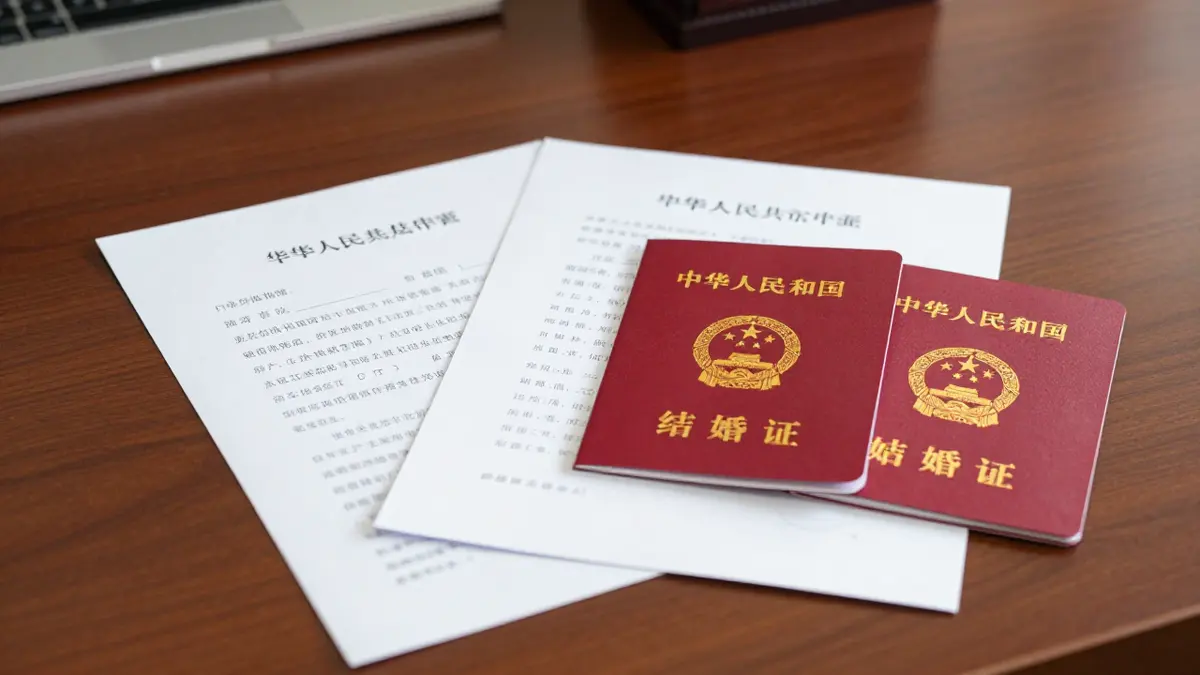
When a marriage connects Mainland China and Taiwan, deciding where and how to divorce can affect marital status, children, property, and later transactions. The first questions are practical: where was the marriage registered, can both spouses agree on every term, and where will a divorce decision need to be used?
Mainland China provides a registration route for eligible couples who agree to divorce and a court route when they cannot reach agreement. A Taiwan court judgment may require a separate recognition application before it can be relied on in Mainland proceedings or records. This guide focuses on Mainland procedures and flags issues to confirm with counsel in the place where the divorce will be pursued.
Start with the place of marriage registration
Under the Marriage Registration Regulations effective May 10, 2025, a Mainland resident and a Taiwan resident may apply for consensual divorce registration in Mainland China if they satisfy the regulatory requirements. The regulations direct them to the provincial civil affairs department or an authority designated by the province, autonomous region, or municipality. The Mainland registration route is unavailable where the marriage was not registered in Mainland China.
Before making travel plans, confirm the correct authority and its current document checklist. The 2025 regulations identify valid identity documents for Taiwan residents, including a valid Mainland travel permit or Taiwan resident residence permit together with identification. Local implementation rules may specify formats, originals, appointments, translations, or other materials.
Consensual divorce registration
Both spouses must appear in person and submit a written divorce agreement. The agreement must state their mutual intention to divorce and record agreement on child care, property, and debt arrangements. A registration office will not accept an application where the spouses have not reached agreement on the required matters or where the marriage was not registered in Mainland China.
The Civil Code provides a 30-day period after the application during which either spouse may withdraw it. After that period, both spouses must personally apply for the divorce certificate within the following 30 days. If they do not complete that step in time, the application is treated as withdrawn. Couples should calendar both periods and avoid treating an initial filing as a completed divorce.
When agreement is not possible
If one spouse disputes whether to divorce or the terms concerning children, property, or debts, the registration route does not resolve the dispute. A spouse may need to file a civil divorce case in a Mainland court with jurisdiction. The appropriate court and service method depend on the parties’ residence, the facts of the marriage, and where relevant evidence or assets are located. Do not assume that a plaintiff’s home court always has jurisdiction; obtain a case-specific jurisdiction review before filing.
Prepare a dated relationship and residence timeline, the marriage record, identity and contact information for both spouses, and records relevant to children and disputed assets or debts. Preserve source documents and evidence of acquisition, payment, ownership, and transfers. For a Taiwan-resident spouse, the court may need to arrange service through applicable cross-strait judicial assistance procedures. Timing and document requirements depend on the case, so plan for service and translation early.
Using a Taiwan court divorce judgment in Mainland China
The Supreme People’s Court rules, as amended effective January 1, 2025, provide a procedure to apply to a Mainland intermediate people’s court or a specialized court for recognition of a Taiwan court civil judgment. The application is generally filed where the applicant or respondent is domiciled or habitually resident, or where the respondent’s property is located. If applying based on property location, evidence of that property is required.
The application materials include an application, the judgment or a certified copy, proof that the judgment is final where required, and identity documents. Documents formed outside Mainland China must satisfy applicable proof requirements. The court examines authenticity, finality, and statutory grounds for refusing recognition. Recognition is a court process; do not assume a Taiwan judgment is automatically reflected in Mainland civil or administrative records. The amended rules exclude judgments concerning identity relationships from the ordinary time limit for applying for recognition.
Recognition and enforcement are distinct steps. If a recognized judgment contains obligations that require enforcement, an enforcement application may be needed under Mainland procedure. For marital status, children, or property situated in Taiwan, ask Taiwan counsel or the relevant authority what additional local steps apply; Mainland recognition rules do not determine the effect of a Mainland judgment in Taiwan.
Children, property, and planning
Keep child arrangements specific: decision-making, residence, contact schedules, travel, schooling, and how parents will exchange information. Property and debt schedules should identify the asset or obligation, its location, supporting records, and the requested result. A general agreement may be difficult to implement where assets or records are in different jurisdictions.
Before choosing a route, make a two-jurisdiction checklist: the place the marriage was registered; each spouse’s residence and identity documents; the intended forum; children’s residence and needs; asset and debt locations; and where the resulting divorce record or judgment must be used. Obtain advice on the rules of each relevant jurisdiction before signing a settlement or filing. Xiang Luo advises clients on the Mainland procedural issues and document preparation involved in cross-strait family matters.