

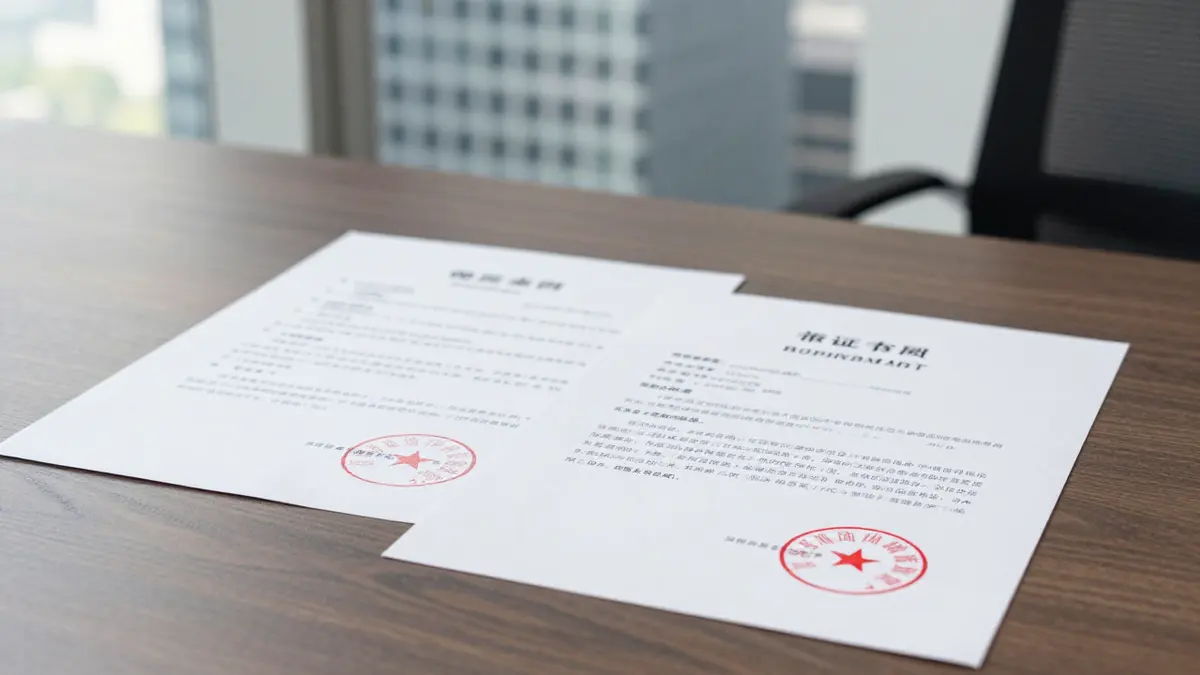
A demand under a China loan guarantee can arrive years after the facility was signed, after amendments, repayments or a transfer of the debt. The date on the demand letter alone does not tell a guarantor whether liability continues. First identify the exact debt and guarantee documents, when the main debt fell due, what the guarantee covers and what steps the creditor took before the guarantee period expired.
For guarantees governed by the Civil Code, the type of guarantee affects the first response: a general guarantor may have a right to require the creditor to pursue the borrower first, while a joint-and-several guarantor can be asked to pay directly. The deadline for preserving guarantee liability is also distinct from the limitation period for suing on that liability. These checks help a guarantor organize the facts before acknowledging, paying or disputing a demand.
1. Freeze the document trail
Keep the demand letter and its envelope, courier tracking, email headers and any proof of delivery. Record when each guarantor received it. Do not rely on a bank employee’s call or an undated account summary as the complete demand record.
Collect the signed guarantee, the loan or facility agreement, drawdown records, repayment schedule, account statements, default and acceleration notices, amendments, extensions, refinancing documents, security documents and any debt-transfer notice. Include board or shareholder approvals and signing-authority records if a company gave the guarantee. Make a chronology of the original maturity date, any agreed changes, missed payments, acceleration, creditor notices, lawsuits or arbitration and enforcement steps.
Ask the creditor to identify the borrower, facility, principal claimed, interest and fees, payments credited, contractual basis for acceleration, guarantee clause relied on and calculation date. Reconcile the claim against the contract and payment records before discussing a settlement amount.
2. Read the guarantee type and scope
The Civil Code recognizes a general guarantee and a joint-and-several guarantee. A general guarantor normally may refuse to perform before the principal dispute has been adjudicated or arbitrated and enforcement against the borrower’s property has failed. Statutory exceptions include cases such as the borrower being missing with no executable property, the borrower entering bankruptcy, evidence that the borrower cannot perform the debt in full, or the guarantor’s written waiver of this right.
With a joint-and-several guarantee, the creditor may request payment from the borrower or the guarantor, within the agreed guarantee scope, when the debt is due and the agreed trigger occurs. The clause’s wording and the transaction documents matter. Under the Civil Code’s default rule, if the parties did not specify the guarantee method or the wording is unclear, the guarantee is treated as a general guarantee. Do not assume that a demand can be sent directly to a guarantor simply because the creditor calls the guarantee “joint” in correspondence.
Check what obligations are covered: principal, interest, default charges, damages and collection costs may be included by statute, subject to the contract. For a maximum-amount guarantee, identify the covered period, ceiling and which advances fall within it. Check whether the signatory had authority and whether the guarantee was made in the form the parties agreed.
3. Calculate the guarantee period from the main debt
Start with the main debt’s contractual performance date, not the date of the demand to the guarantor. Read the guarantee clause for a defined period and identify whether that date changed. Under the Civil Code, if a stated period ends before or at the main debt’s due date, it is treated as no agreed period. If no period was agreed, or it is unclear, the default is six months from the end of the main debt performance period. Where that due date is itself unclear, the period runs from the end of the creditor’s grace period for payment.
A clause saying that the guarantee lasts “until principal and interest are fully paid” is treated by the Supreme People’s Court as unclear; the period is six months from the main debt’s due date. The guarantee period does not stop, restart or extend by ordinary interruption rules. Put the calculated start and end dates on a calendar, but have counsel check how the contract, payment schedule, acceleration clause and any refinancing affect those dates.
For a general guarantee, the creditor must sue or apply for arbitration against the borrower within the guarantee period. A letter sent only to the general guarantor is not the statutory step described in the Civil Code. For a joint-and-several guarantee, the creditor must request that the guarantor perform within the period. The correct act, recipient and proof of timing therefore depend on the guarantee type.
4. Keep the guarantee period separate from limitation
The guarantee period determines whether the creditor preserved the guarantee claim. The limitation period for a claim against the guarantor is a separate clock that may begin only after a timely step. For a general guarantee, the Civil Code starts that limitation period when the guarantor’s right to refuse performance ends. For a joint-and-several guarantee, it starts when the creditor requests performance from the guarantor. A six-month default guarantee period is not a six-month limitation period.
Record every relevant filing and service date. For a lawsuit or arbitration, obtain the filed claim, acceptance record and proof of service. For a joint-and-several demand, preserve the complete notice and reliable receipt evidence. Do not infer that a demand was timely merely because litigation followed, or that a late demand revived a guarantee that had already ended.
5. Check changes, transfers and payments
Compare each amendment with the guarantee and any written consent from the guarantor. If the lender and borrower changed the debt amount without the guarantor’s written consent and increased the debt, the guarantor is not liable for the increased portion under the Civil Code; a reduction generally leaves the guarantee attached to the reduced debt. Changing the main debt’s performance date without the guarantor’s written consent does not change the guarantee period.
Check whether the creditor transferred the debt and whether the guarantor was notified. Also account for borrower payments, collateral proceeds, set-off and any agreed cap before accepting the amount claimed. A guarantee’s wording, the timing of the transaction and applicable transition rules can change the result, particularly for older contracts.
6. Respond without conceding the issue
Send a timely, factual response that requests the documents and calculation needed to assess the claim. State that the guarantor is reviewing the demand and reserves contractual and statutory defenses. Avoid signing a balance confirmation, repayment undertaking, extension, waiver or new guarantee before the full record has been checked. Ask counsel to review any proposed acknowledgement before it is sent.
The Supreme People’s Court says that when guarantee liability has already expired because the creditor did not act within the guarantee period, a later written demand signed or sealed by the guarantor does not by itself revive that liability; a new guarantee contract may be a different matter. That is a reason to review the wording of a proposed response carefully, not a reason to ignore a genuine court or arbitration notice.
First-response checklist
- Confirm the creditor’s identity, authority and any debt transfer.
- Match the demand to the signed guarantee and the correct loan or facility.
- Classify the guarantee as general or joint-and-several from the contract wording.
- Calculate the main debt due date and guarantee-period end date, including amendments.
- Identify which act the creditor took within that period and preserve proof.
- Reconcile principal, interest, charges, payments and the guarantee cap.
- Track any court, arbitration, enforcement or settlement deadline separately.
- Get legal review before admitting liability, paying or signing a new document.
This guide summarizes general rules under the PRC Civil Code and the Supreme People’s Court’s guarantee interpretation. Older guarantees, cross-border elements, company approvals and special guarantee structures may require separate analysis of the governing law and transition rules.


