
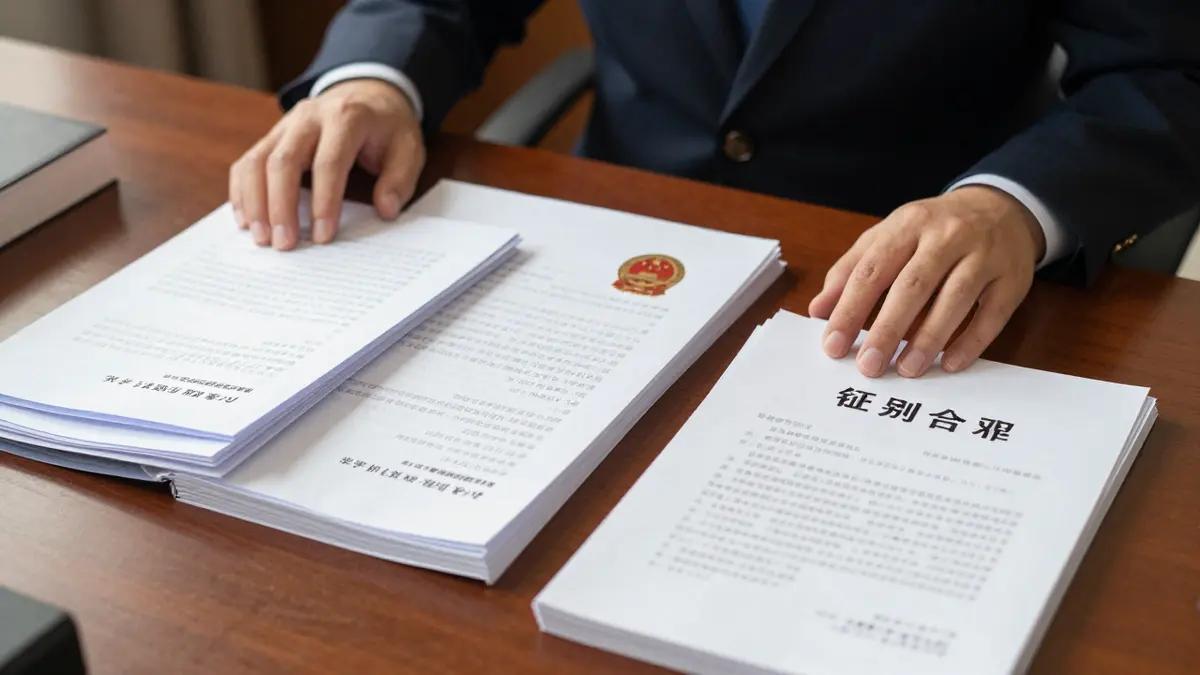
A request to attend a police interview can be unsettling, especially when it is delivered through an employer or in a language the executive does not understand. The first practical step is to identify the procedure named on the document. A criminal summons, compulsory summons, criminal detention, and arrest are different measures with different legal consequences. A summons does not itself mean the person has been detained.
For a foreign executive, the immediate questions are concrete: who issued the notice, where and when must the person attend, how long can the questioning last, and how can counsel and interpretation be arranged? The Criminal Procedure Law sets specific rules for summons and questioning. Keep a copy or photograph of every document and have PRC criminal-defense counsel review it promptly. This guide concerns a person asked to attend questioning; a later change to detention or arrest requires separate advice about that measure.
Identify the measure before making a plan
Read the heading, issuing authority, legal basis, named person, attendance time, and place. Ask for a copy if one has not been provided. The Criminal Procedure Law distinguishes a summons and a compulsory summons from criminal detention and arrest. Do not infer the person’s formal status from a phone call, an employer’s description, or the fact that investigators keep a passport or ask the person to remain available. Ask counsel to confirm the measure directly with the authority.
Article 119 allows investigators to summon a criminal suspect to the investigating authority or to the suspect’s residence within the city or county where the case is being handled. A summons ordinarily requires the investigating authority’s certificate. For an on-the-spot oral summons, investigators must identify themselves with their work identification and record the summons in the interrogation record. Keep a note of who made the request, when it was made, and what documents were shown.
Track the summons clock
Under Article 119, questioning under a summons or compulsory summons may not exceed 12 hours. It may extend to 24 hours only where the case is especially major and complex and detention or arrest may be necessary. Investigators may not use repeated summonses to disguise detention. The law also requires food and necessary rest during the period.
Record the time the person was brought in and the time they are released. If the interview continues toward the applicable limit, counsel should promptly ask the authority to clarify the person’s status and the legal basis for continued questioning. The often-mentioned 37-day period concerns a specific detention-to-arrest review process for certain cases; it is not a summons limit and does not apply just because someone was asked to attend an interview.
Arrange Chinese criminal-defense counsel early
Article 34 allows a suspect to retain defense counsel from the first interrogation by an investigating agency or from the date a coercive measure is imposed. During the investigation stage, only a lawyer may act as defense counsel. Article 38 permits counsel to provide legal help, make complaints or accusations, apply to change a coercive measure, ask about the suspected offense and related case information, and offer views to the investigators.
These provisions do not mean counsel is automatically entitled to sit in on a police interrogation. Counsel can advise the executive before and after questioning, communicate with the investigating authority within the statutory framework, and help assess any change in status. If the person is later taken into custody, the rules for meeting a person in custody apply; counsel should handle the required credentials and request access promptly.
Address language needs and answer carefully
Article 9 requires translation for participants in proceedings who do not understand the commonly used local language. Tell counsel and the investigators clearly which language the executive understands best and request interpretation where needed. Do not sign a statement that the person cannot read or understand; ask for it to be accurately interpreted and explain any translation concern before confirming the record.
At the start of questioning, Article 120 requires investigators to ask whether the suspect committed a crime and to inform the suspect of procedural rights and relevant rules on leniency and plea. The suspect must truthfully answer questions relevant to the case, but may refuse to answer questions unrelated to it. This is not a blanket right to refuse all questions. Counsel can help identify the scope of the case and address uncertainty about a question without guessing or speculating.
Review the interview record before signing
Article 122 requires the interrogation record to be shown to the suspect for verification or read aloud if the suspect cannot read. The suspect may request corrections or additions. After confirming the record is accurate, the suspect signs or seals it; the suspect may also request to write a personal statement, which investigators must allow. Take time to check names, dates, figures, translations, and whether the recorded answer matches what was actually said. Raise errors before signing and ask that corrections be reflected in the record.
What the employer should do
- Designate a contact to preserve the notice and record the time, location, issuing authority, and any change in status. Avoid circulating unverified explanations about the investigation.
- Arrange independent PRC criminal-defense advice for the executive. The company may also need its own counsel because the company’s interests and the individual’s interests can differ.
- Preserve potentially relevant business records and suspend routine deletion where appropriate. Article 54 requires organizations and individuals to truthfully provide evidence that investigators collect; Article 44 specifically prohibits defense lawyers and other defenders from helping conceal, destroy, or falsify evidence or coordinate testimony.
- Do not coach employees to align accounts, alter records, or contact witnesses about what they should say. Direct document requests through counsel and maintain a clear record of preservation steps.
If the person does not return as expected
Contact counsel immediately if questioning exceeds the stated period, investigators do not clarify the person’s status, or the executive is not released when expected. If the authority imposes criminal detention or arrest, ask counsel to confirm the formal measure and its date. Family notification and lawyer access rules then become relevant under the separate custody provisions of the Criminal Procedure Law; do not calculate those deadlines from the original summons time.
Primary source: Criminal Procedure Law of the People’s Republic of China (official text; see Articles 9, 34, 38, 44, 54, 119, 120 and 122). The applicable rules and case circumstances should be checked with qualified PRC counsel.