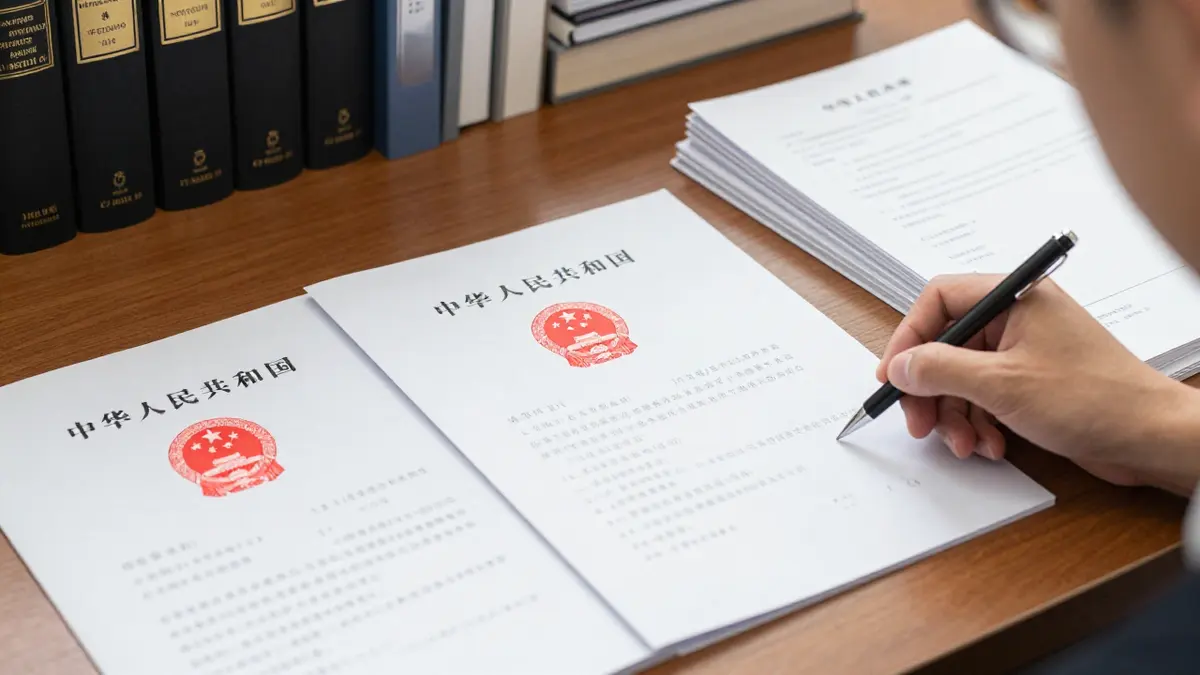

A China visa and a residence permit serve different purposes. A residence permit is not an automatic next step for every visitor who plans to stay a long time: first check the visa, its remarks, the reason for residence and the rules that apply to that category. A mismatch can delay an application or leave too little time to resolve the problem.
This checklist helps a foreign national and the inviting employer, school or family member prepare the next steps: identify the applicable route, calculate the filing date, assemble evidence for the stated purpose, confirm the local exit-entry process and track changes or renewal. National rules set the framework, while the receiving authority may specify current local procedures and documents.
1. Start with the visa and entry record
Read the visa in the passport and the entry record together. Confirm the visa category, the date of entry, the permitted period of stay and whether the visa says that a residence permit must be obtained after arrival. Article 30 of the Exit and Entry Administration Law sets a 30-day filing period for a foreigner whose visa specifies that requirement. That is not a blanket rule that every visitor staying more than 180 days automatically qualifies for a residence permit. The visa category and residence purpose matter; Article 31 also allows refusal where the visa is not one for which a residence permit should be issued or supporting documents are missing.
Background & legal framework
Write down the entry date and calculate the deadline immediately. If the visa, entry stamp or travel history is unclear, or the 30-day period may have passed, contact the local public security exit-entry administration or the National Immigration Administration’s 12367 service before relying on an assumed extension or conversion. Do not make travel plans on the assumption that an application will be accepted.
2. Match the application to the real reason for residence
The residence-permit category should fit the activity and supporting institution in China. A work route, a study route and a family or private-affairs route use different evidence. The National Immigration Administration’s service guide gives examples of supporting documents, but the receiving authority should confirm the current checklist for the applicant’s city and circumstances.
- Work: The NIA guide lists the work permit and an employer certification for a person entering on a Z visa. A work permit and a work-type residence permit are separate requirements. The Exit and Entry Administration Law says a foreigner working in China must hold both; a residence permit by itself is not work authorization.
- Study: The guide lists a school letter stating the study period and admission or enrollment evidence for an X1 visa. Students who want to work part-time or take an internship outside the school may need the school’s approval and a residence-permit remark identifying the location and duration before doing so.
- Family reunion or private affairs: Depending on the visa and relationship, the file may need evidence of kinship, a letter from the person being visited, and that person’s identity or residence documents. Confirm which family relationships and document forms apply to the specific case.
- Other purposes: Journalism, talent, investment and other circumstances can have their own legal route and supporting authority. Do not reuse a work or family checklist without confirming that it fits the visa and purpose.
3. Prepare a document file the authority can verify
The NIA service guide’s general file includes a valid passport or other travel document, the relevant application form and compliant photograph, materials supporting the reason for residence, and any additional formalities required for that application. Keep the original documents available for inspection and prepare copies. Make sure names, passport numbers, dates and organization details agree across the passport, visa, work or study records, invitation letters and forms.
For family or other records issued outside China, ask the receiving office how it currently requires translation and authentication. Do not assume that an old checklist’s consular-stamp instructions apply to every document or country. The NIA guide says foreign-language supporting materials should be translated into Chinese; local officers can confirm the accepted translation format and any applicable authentication route. Keep scans and a document index, but submit truthful, consistent information and retain proof of what was filed.
How the dispute was handled
4. Confirm where and how to file
Applications are handled by the public security exit-entry administration for the intended place of residence. The NIA guide says applicants generally apply in person; it identifies limited circumstances in which an inviting entity or individual, family member, relative or professional service organization may apply on the applicant’s behalf, including certain age, talent or mobility situations. Biometric information such as fingerprints may be collected. Check whether an appointment is required, which originals must be brought, whether the applicant must attend, the local fee and how the authority will contact the applicant.
When the application is accepted, keep the official receipt and follow its instructions for any interview, supplementary material or collection. Article 30 states that the exit-entry administration examines the application and makes a decision within 15 days after receipt. The NIA service guide describes an acceptance receipt valid for no more than 15 working days. These are procedural time limits, not a guarantee of approval on a particular day; incomplete evidence or verification can affect the process. Ask the office what the receipt means for the applicant’s documents and lawful stay while processing.
5. Keep accommodation and activity records current
Hotel accommodation is registered by the hotel under the applicable rules. For a residence other than a hotel, the foreign national or host must register the accommodation with the local public security organ within 24 hours after arrival. The NIA provides online registration information for some locations as well as local in-person channels; confirm the available method where the person is staying and save the registration record. A residence permit does not remove this separate address-registration obligation.
Keep activity within the purpose authorized by the visa or residence status. In particular, work requires both a work permit and a work-type residence permit, and students may need a specific remark for off-campus work or internship. A change of employer, school, family basis, address or passport can require separate notification or amendment steps. Check with the relevant authority before relying on the existing document after a material change.
Practical implications
6. Track renewal and changes before they become urgent
Article 32 requires a residence-extension application within the 30 days before the permit expires. The NIA guide directs applicants to submit supporting material at the local exit-entry department. Put the expiry date and an earlier preparation reminder in the calendar, and ask the responsible employer, school or family member to renew any supporting permit or letter in time.
Article 33 also requires a holder to apply to amend registered information on a residence permit within 10 days after that information changes. Compare the printed permit with the current passport and residence basis. If a passport is renewed or a registered item changes, ask the exit-entry authority what must be updated and keep the filing receipt. If renewal or a change is refused, the law sets specific consequences; get individualized advice promptly rather than waiting for the document to expire.
Use current local instructions
Before filing, verify the visa condition, the exact 30-day date if Article 30 applies, category-specific evidence, translations, appointment rules, fees and collection process with the exit-entry administration for the intended residence. The National Immigration Administration’s 12367 service can direct users to current guidance. For the statutory framework, see the [Exit and Entry Administration Law, especially Articles 30–33 and 39–41](https://www.nia.gov.cn/n794014/n1050181/n1050479/c757592/content.html), the NIA [Service Guide on Issuance of Residence Permits](https://en.nia.gov.cn/n147423/n147478/n147715/c158270/content.html), and its current [accommodation-registration guidance](https://en.nia.gov.cn/n147418/n147463/c197328/content.html). The NIA English translations are reference materials; confirm the authoritative Chinese text and local instructions for a live application.