
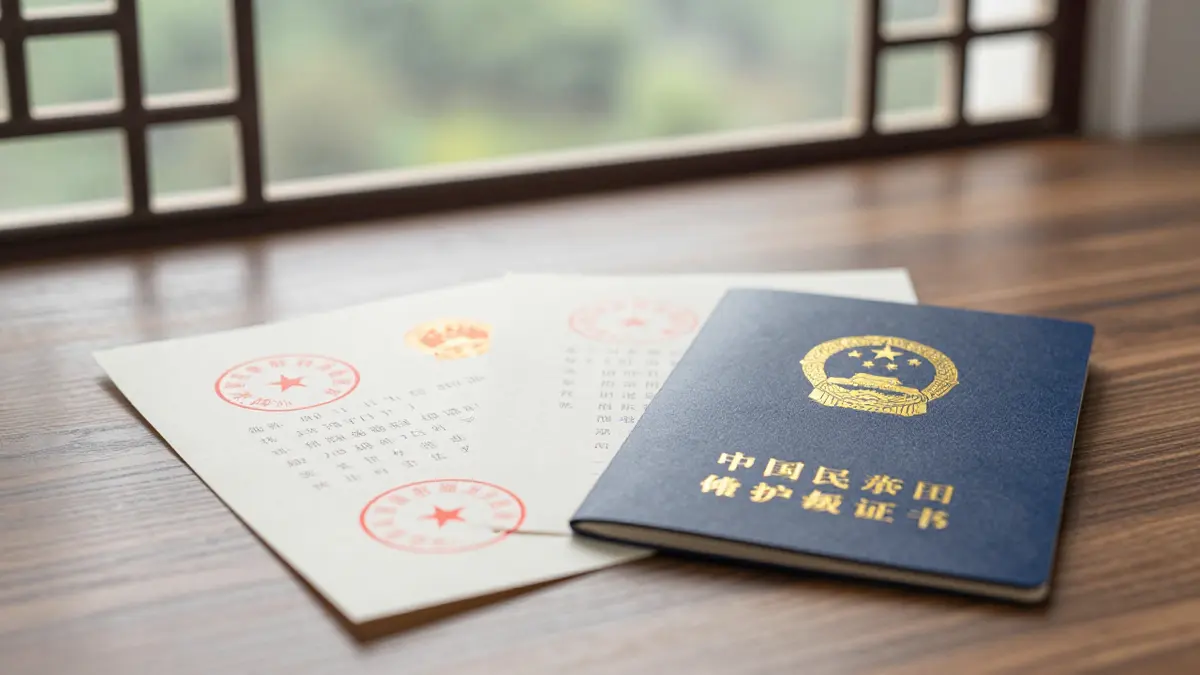
A land-use certificate is important evidence of a right in China, but it may not settle a discrepancy with the official immovable-property register. The Civil Code generally treats the register as the basis for the right and its contents; if the certificate and register differ, the register controls unless evidence shows the register itself is wrong.
A right holder or interested party can apply to correct an erroneous entry. If the registered holder does not agree, the interested party may seek objection registration, but must file a lawsuit within 15 days after that registration or the objection expires. The application, evidence, and deadline should be handled as one process.
Check the register, not only the paper certificate
Civil Code Article 216 says the immovable-property register is the basis for ownership and the contents of a real right. Article 217 treats the title certificate as evidence that the holder has the right, but requires the certificate to match the register. If they do not match, the register generally controls unless evidence proves that the register is erroneous.
For a company reviewing land-use rights, compare the current register entry with the certificate, the source contract or grant documents, parcel identifiers, area, boundaries, term, permitted use, and any registered encumbrances. Record the date and source of each copy. A certificate that looks complete may not reveal a later transfer, correction, mortgage, or other entry in the register.
Separate the contract from the registered right
Article 215 distinguishes the agreement from the property right: unless law or the parties provide otherwise, a contract concerning the creation, change, transfer, or termination of a property right takes effect when the contract is formed, even if registration has not yet occurred. Where the law requires registration for the property-right change, however, the change takes effect through registration. A signed transfer agreement and an updated register therefore answer different questions.
If a transaction is pending, check whether an agreed pre-notice registration is available and whether it has been recorded. Article 221 gives pre-notice registration a protective effect against later dispositions without the registered party’s consent, subject to the statutory expiration rule if the final registration is not applied for within 90 days after it becomes possible. Confirm the applicable timing and documents with local registration counsel.
Request correction when the entry is wrong
Under Article 220, a right holder or interested party who believes the register is wrong may apply for correction registration. The registration institution must correct the entry if the registered right holder gives written consent or the applicant provides evidence that the entry is erroneous. Assemble the existing register record, the certificate, the source document, and the specific correction requested; explain how each record supports the change.
Keep the application, attachments, delivery proof, and any written decision. If the institution requests further material, preserve the request and response. A correction application is aimed at an inaccurate register entry. Where the underlying parties genuinely dispute who holds the right or where the boundary lies, that dispute may require a separate procedure to establish the facts or resolve the competing claims.
Use objection registration with its short deadline in mind
If the registered holder does not agree to correction, an interested party may apply for objection registration. Article 220 provides that the objection becomes ineffective if the applicant does not file a lawsuit within 15 days after the objection is registered. Calendar the deadline from the registration date and prepare the supporting claim before applying; do not assume negotiations or an administrative request pause the 15-day period.
An objection registration can alert others that the entry is disputed, but it does not itself decide ownership or permanently replace the register. An improperly filed objection that causes damage may expose the applicant to a compensation claim. Keep the evidence for the alleged error and the basis for the requested court relief organized from the start.
Protect the supporting record
Request copies of relevant registration materials through the available procedure, retain the right-source contract and payment evidence, and preserve survey or boundary records. Limit access to personal or commercially sensitive register information to the purpose for which it was obtained; Civil Code Article 219 prohibits public disclosure or unlawful use of another right holder’s registration information.
The register-versus-certificate rule concerns registration evidence. It does not decide a land-expropriation process, grave-relocation arrangements, or compensation entitlement. Identify the actual issue before selecting a remedy. See the official Civil Code, Articles 209 and 215–221.