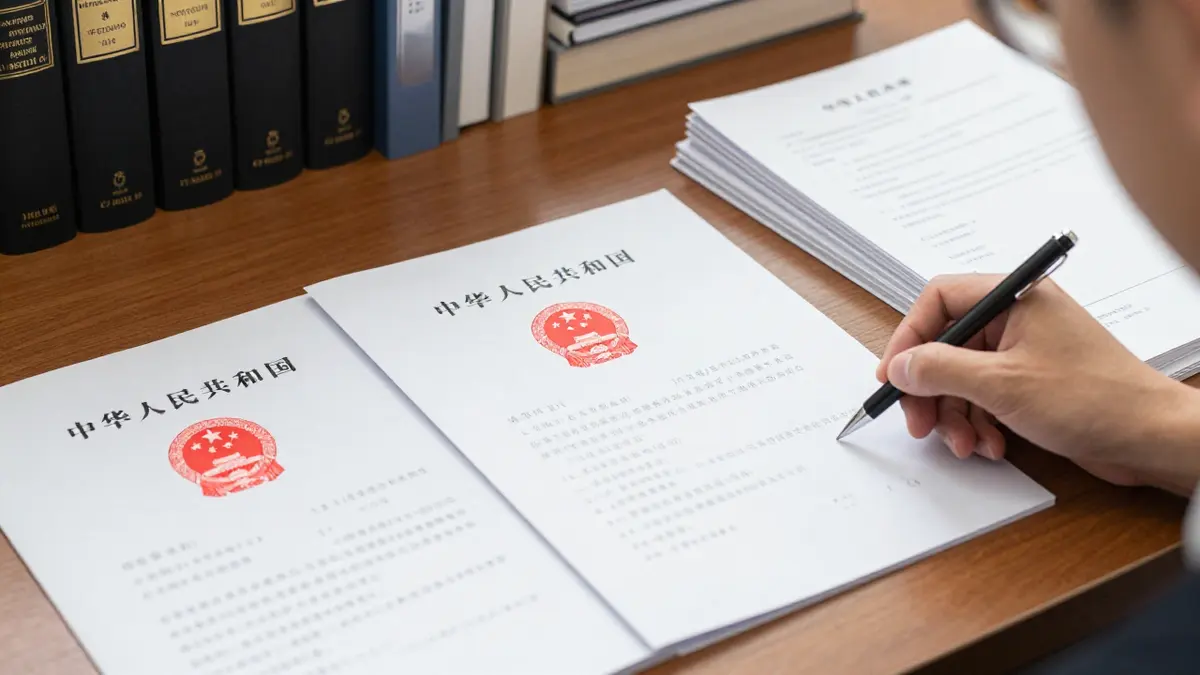

Foreign nationals who plan to visit, work, study, or join family in Hebei need to keep their immigration status aligned with the purpose and duration of each stay. China’s Exit and Entry Administration Law distinguishes visas, stay permits, and residence permits; permission to enter or remain in China does not by itself authorize employment. The documents required depend on the activity, visa category, employer or host, and intended length of stay.
Before travel, and again after a change in work, passport, address, family circumstances, or travel plans, check the relevant document dates and filing requirements. This guide summarizes national rules that often matter to people living or working in Hebei and gives employers and foreign nationals a practical checklist. Confirm local forms and appointment procedures with the responsible public security exit-entry administration or work-permit authority.
Match the document to the planned activity
Check the visa category, permitted duration of stay, number of entries, and any stated purpose before travel. A visa governs entry and the conditions attached to that entry; a stay permit or residence permit applies in the circumstances set by law. Under Article 37 of the Exit and Entry Administration Law, a foreign national may not engage in activities inconsistent with the purpose of stay or residence and must leave before the authorized period expires.
The official Exit and Entry Administration Law and the National Immigration Administration’s residence-permit service guide describe the main procedures. A visa does not automatically become a residence permit: check the visa endorsement and the applicant’s circumstances to see whether a permit application is required after entry.
Employment requires separate authorization
Foreign nationals working in China must obtain a work permit and a work-type residence permit under Article 41 of the law. The entry visa is a separate step. For many employment cases, the employer arranges a Notification Letter for Foreigner’s Work Permit before the worker applies for the relevant visa; the precise route depends on the planned work and duration. Do not treat a job offer, business visa, or residence document for another purpose as work authorization.
Employers should make sure that the worker’s approved role and work-permit details match the actual arrangement, and should check the filing steps with the competent work-permit authority where the employer is located. The State Council’s Guide to Working and Living in China as Business Expatriates summarizes the national sequence and notes that work-permit information changes may require an update within the stated deadline.
Family members who hold a private-affairs or reunion residence permit do not thereby receive permission to work. Student residence permits also have specific conditions: off-campus work-study or internships require school approval and the required notation on the residence permit before the activity begins.
Track residence, stay, and registration deadlines
- If a visa specifies that a residence permit is required after entry, apply to the exit-entry administration of the public security organ in the intended place of residence within 30 days after arrival.
- Apply to extend a residence permit within the 30 days before its expiry. If a visa’s authorized stay needs extension, the law calls for an application at least seven days before that stay period ends.
- If a registered item on a residence permit changes, such as passport details, apply to update it within 10 days of the change.
- Hotels register foreign guests’ accommodation. For a stay in a private home or other non-hotel accommodation, the foreign national or host must complete residence registration with the local public security organ within 24 hours of arrival.
These deadlines come from Articles 29, 30, 32, 33, and 39 of the law. Keep copies of application receipts and written decisions, and avoid booking travel on the assumption that an extension will be approved. The authority decides applications based on the stated purpose and supporting documents.
Consider permanent residence separately
Permanent residence is a distinct status, not an extension of a temporary residence permit. The National Immigration Administration lists several eligibility routes, including qualifying investment, employment, special contribution, and family circumstances. Each route has its own conditions and evidence. Its permanent-residence eligibility guidance should be checked before preparing an application; a general investment amount or length-of-marriage summary is not enough to establish eligibility.
Checklist for a planned move or status change
- Write down the planned activities, intended length of stay, travel dates, and number of entries needed.
- Check the visa category and the authorized stay period; confirm whether a stay or residence permit is required after arrival.
- For work, coordinate the employer’s work-permit application, the entry visa, and the work-type residence-permit steps before the employee starts work.
- For family members and students, verify the correct residence-permit purpose and any limits on employment, internships, or study-related activity.
- Keep passport, visa, residence-permit, work-permit, address-registration, and application-receipt copies together; track each expiry and filing deadline.
- After a passport, job, address, or family-status change, ask the relevant authority which records must be updated and by when.
- Confirm the current local forms, appointment method, translations, and supporting documents with the competent Hebei office before filing.
Hebei is subject to the national entry-exit framework, while accepting offices may publish local filing instructions. Verify those current instructions for the city where the foreign national will live or work before travel or a status change.