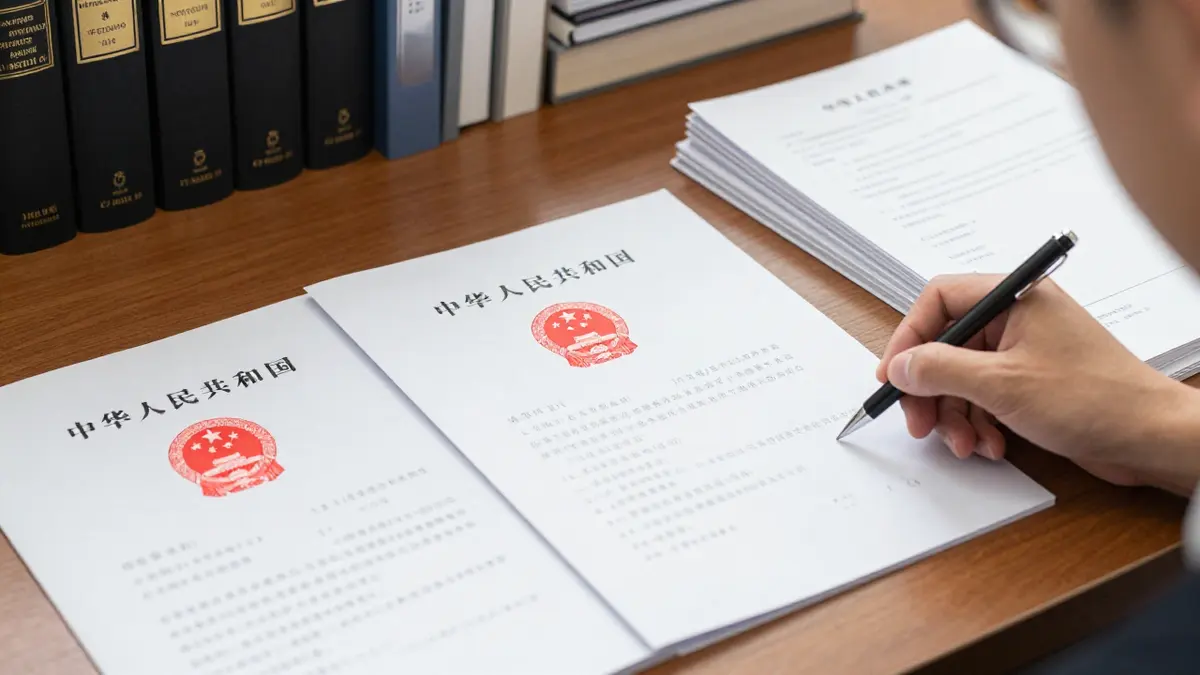

For a foreign employee coming to China, a passport check is only the first step. Employers need to distinguish identity and document consistency checks from an official decision that a passport or other entry document is genuine. China’s Exit and Entry Administration Law reserves document-authenticity determinations to the issuing authority, border inspection authorities, or public security exit-entry authorities. A visual review can flag a question, but it cannot settle one.
Before work begins, confirm that the person’s entry and residence status fits the planned activity and that the required work authorization and work-type residence document are in place. Keep a clear record of expiry dates, work location, and changes to passport details. If a passport is renewed, lost, or damaged, follow the relevant authority’s procedure promptly; do not assume that the old residence document or an internal HR record updates automatically.
What a passport check can establish
At onboarding, compare the passport identity page with the employee’s application, employment records, visa, and any work-authorization information. Check that names and passport numbers are recorded consistently, that the document presented belongs to the person, and that the passport and immigration documents appear current. Limit access to copies and personal data to staff who need them for a lawful business or filing purpose.
These are preliminary consistency checks, not authentication. Under Article 69 of the Exit and Entry Administration Law, the issuing authority, an exit-entry border inspection authority, or a public security exit-entry administration authority determines whether an entry-exit document is genuine. If a discrepancy or alteration is suspected, preserve the presented information, pause the affected onboarding or filing step, and ask the appropriate authority or qualified counsel how to proceed. Do not tell an applicant that a document is forged based only on appearance or an unofficial online check.
The law also sets entry conditions: a foreign national must present a valid passport or other travel document and the required visa or entry permit, complete the relevant procedures, and undergo border inspection. Admission is decided at the border. An employer’s review is not a substitute for that decision.
Confirm that the planned work is authorized
A visa or permission to enter does not, by itself, authorize employment. Article 41 requires a foreign national working in China to obtain work permission and a work-type residence document; an organization or individual may not employ someone who lacks the required permission and residence document. Article 43 also treats work without permission, or work outside the authorized scope, as illegal employment.
China changed how work-permit information is carried from 1 December 2024. The Ministry of Human Resources and Social Security integrated foreign work-permit information with the social security card system. After entering China, a foreign national no longer needs to obtain a separate physical work-permit card under the new process. Existing physical cards continue under a “no change, no replacement” approach until an extension or change is handled through the integrated process. Employers should verify the current work-permit information through the applicable official system or electronic social security card process, and confirm the separate work-type residence document with the relevant public security exit-entry authority.
Match the approval to the real role and work arrangements. If the employer, job, location, or duties change, check with the local work-permit and immigration authorities whether an update or new filing is required before relying on the old record. Do not let a foreign employee start work while an application is pending unless the authorities confirm that the person may do so.
Track residence status and registration separately
Article 37 prohibits activities inconsistent with the stated reason for stay or residence and requires departure before the permitted period expires. Use the expiry date shown on the person’s actual visa or residence document and confirm any extension or change with the issuing authority. There is no single renewal buffer that fits every permit and locality, so build reminders from the applicable document and local service instructions.
For accommodation, hotels arrange foreign-guest registration under the rules that apply to hotel stays. If a foreign national stays somewhere other than a hotel, the person or host must register the stay with the local public security organ within 24 hours after moving in. Article 38 also requires foreign nationals aged 16 or older who are staying or residing in China to carry their passport or other international travel document, or their foreigner stay or residence document, for inspection.
Residence documents include the passport or other international travel-document number among their registered particulars. If that information changes, the holder must apply to the local public security exit-entry administration for a change within 10 days. A renewed passport should therefore trigger a check of the residence-document record, not merely an update to the employer’s personnel system.
If a passport is lost, damaged, or replaced
Have the employee contact the passport-issuing country’s embassy or consulate for instructions on replacing a foreign passport. Then contact the local public security exit-entry administration about the person’s visa, stay, or residence document. China’s law requires a foreign national whose ordinary visa or stay or residence document is damaged, lost, or stolen to apply to the local authority for replacement or reissuance under the applicable procedures. The National Immigration Administration’s service guidance describes supporting documents that can include a loss report or a consular note and the new valid passport; requirements depend on the document and case.
Keep copies of the loss report, consular communication, replacement passport, authority receipt, and updated immigration document. Do not assume that a consular replacement passport automatically transfers a visa or residence record, and do not plan travel until the employee and counsel have confirmed which valid documents are required.
Employer checklist
- Compare identity details across the passport, immigration documents, work-permit record, and employment file; record unresolved differences without making an unsupported authenticity finding.
- Confirm the current work authorization and work-type residence document before the employee starts work, and confirm that the actual role and work location fit the authorization.
- Record the expiry dates shown on the employee’s documents and assign a responsible person to check the relevant local extension or change process in advance.
- Confirm that hotel or non-hotel accommodation registration is handled, including the 24-hour deadline for non-hotel stays.
- Recheck the residence-document information after a passport renewal and apply for a change within 10 days if registered particulars changed.
- For suspected document irregularities, loss, damage, or a material change in duties or location, pause the affected step and obtain guidance from the relevant issuing, work-permit, or public security exit-entry authority.
Official references: Exit and Entry Administration Law (Articles 24, 37–45, and 69); National Immigration Administration guidance on visa and residence-document services; and the Ministry of Human Resources and Social Security’s notice on integrating foreign work permits with social security cards.
This article provides general information, not a determination about a person’s documents or immigration status. Procedures may depend on the document and locality; confirm current requirements with the relevant authorities or qualified counsel.