A Chinese utility model patent can be granted after preliminary examination. If you are considering a warning letter or infringement claim, first ask what the patent right evaluation report says about the granted right and whether the accused product can actually be mapped to its claims. The report is a useful piece of evidence; it does not decide infringement or guarantee that the patent will survive every later challenge.
China’s Patent Law lets a court or the department handling a patent dispute ask for a report on a utility model or design, and lets the parties provide one voluntarily. The law does not make the report an automatic prerequisite to contacting a suspected seller. This guide sets out how a utility-model owner can use the report as one checkpoint in an enforcement decision.
Confirm that the report procedure fits your right
This guide concerns a granted Chinese utility model. Patent Law Article 66 also provides for a patent-right evaluation report in disputes involving design patents. It does not describe the same report procedure for invention patents. If your right is an invention patent, do not assume the utility-model report rules apply.
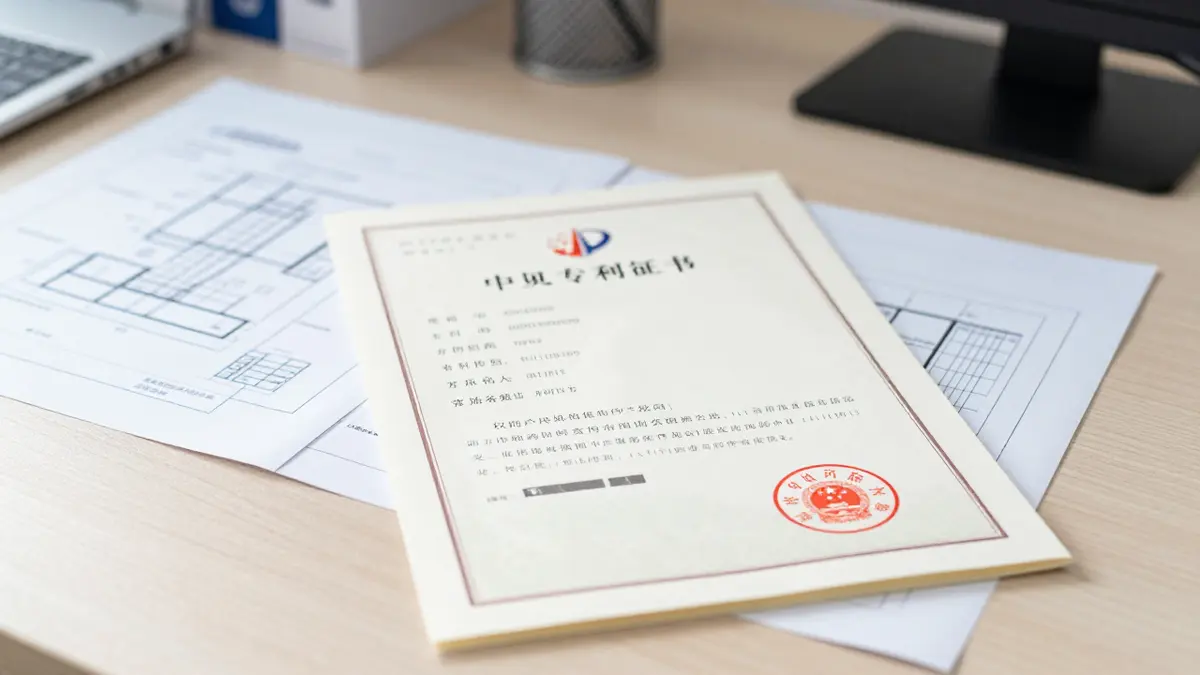
For a utility model, gather the patent number, grant announcement, granted claims and drawings, later amendments or correction notices, current legal status, and ownership records. Confirm that the proposed claimant is the registered patentee or has a documented basis to act as an interested party. Check maintenance fees and any transfer, licence, co-ownership or pledge information that may affect who can act and what remedies are commercially available.
Request the report for the correct patent
After grant is announced, the patentee, an interested party or the alleged infringer may request a patent-right evaluation report from the China National Intellectual Property Administration. An applicant may also request one while completing the registration formalities for grant. The request must identify the application or patent number, and each request is limited to one patent.
The Implementing Regulations set a two-month period for CNIPA to issue a report after it receives the request. If the applicant requests the report during grant registration, the period runs from announcement of the grant. Any entity or individual may inspect or copy an issued report. These procedural periods help with planning, but a pending commercial threat, limitation issue or hearing date needs its own case-specific timetable.
Read the report as evidence about patent validity
The report records CNIPA’s search, analysis and evaluation of the utility model. Review the cited documents and reasoning with patent counsel. Ask which granted claims were assessed, what prior art was considered, and whether any comments affect the commercial feature you intend to enforce. Do not reduce the result to a simple “valid” or “invalid” label without checking the analysis and the current patent file.
The report addresses the strength of the granted right; it does not answer whether a particular product falls within the scope of a claim or whether a particular company performed an infringing act in China. A report is evidence that may be used in handling a dispute, not a court judgment. Article 66 allows the court or competent department to request it and allows the parties to submit it voluntarily.
Make a separate claim-to-product comparison
For a utility model, Patent Law Article 64 says protection is defined by the claims, with the description and drawings available to interpret them. Take each asserted claim limitation and compare it with the product, component or structure you can document. Do not rely on a product name, marketing phrase or visual resemblance alone. Record which source supports each element and identify any limitation for which the evidence is still incomplete.
Also identify the relevant conduct and responsible entities: who makes, uses, offers for sale, sells or imports the product in China; where and when the conduct occurred; and whether a licence, authorization or other explanation exists. Keep dated copies of listings and advertisements, invoices, product packaging, manuals, technical materials and communications. If purchasing a sample, preserve the transaction record, packaging and chain of custody, and ask counsel whether notarization or another evidence-preservation step is appropriate before the material disappears.
Check the challenge risk before making a demand
A patent evaluation report does not prevent another party from requesting invalidation. Before escalating, review the closest prior art, the technical history and any earlier products or disclosures that could be raised against the utility model. The alleged infringer may also rely on the prior-art defence in Patent Law Article 67. Consider whether the report’s weaknesses, the claim comparison and the available infringement evidence together support the proposed scope of a warning or claim.
A demand should identify the patent and the specific conduct at issue, explain the claim-to-product basis without overstating what CNIPA or a court has decided, and state a proportionate requested response. Avoid asserting that the evaluation report proves infringement. Have Chinese patent counsel review the recipients, evidence and requested relief, especially where the notice could disrupt a supply chain or trigger an invalidation request.
Choose the next step from the evidence
If the evidence is incomplete, continue targeted collection or seek a technical comparison before sending a broad allegation. If the mapping is strong and the patent appears supportable, consider a focused licensing discussion, a request to the competent department to handle the dispute, or a civil action. Patent Law Article 65 recognizes consultation, administrative handling and court proceedings; the right path depends on the conduct to stop, the evidence available, the parties and the commercial objective.
Before instructing counsel, assemble the patent file and current status, the evaluation report and cited documents, a claim chart against the actual product, dated evidence of China-related acts, ownership and authority documents, and a short statement of the outcome sought. Keep the decision to enforce separate from the question of damages: the evaluation report is only one part of the evidentiary record.
Primary legal sources
- Patent Law of the People’s Republic of China (2020 revision), Articles 64–67.
- Implementing Regulations of the Patent Law (2023 revision), Articles 62–63.
Check the official Chinese texts and current patent file. This guide is general information; the patent claims, product evidence and procedural posture determine the advice for a particular dispute.