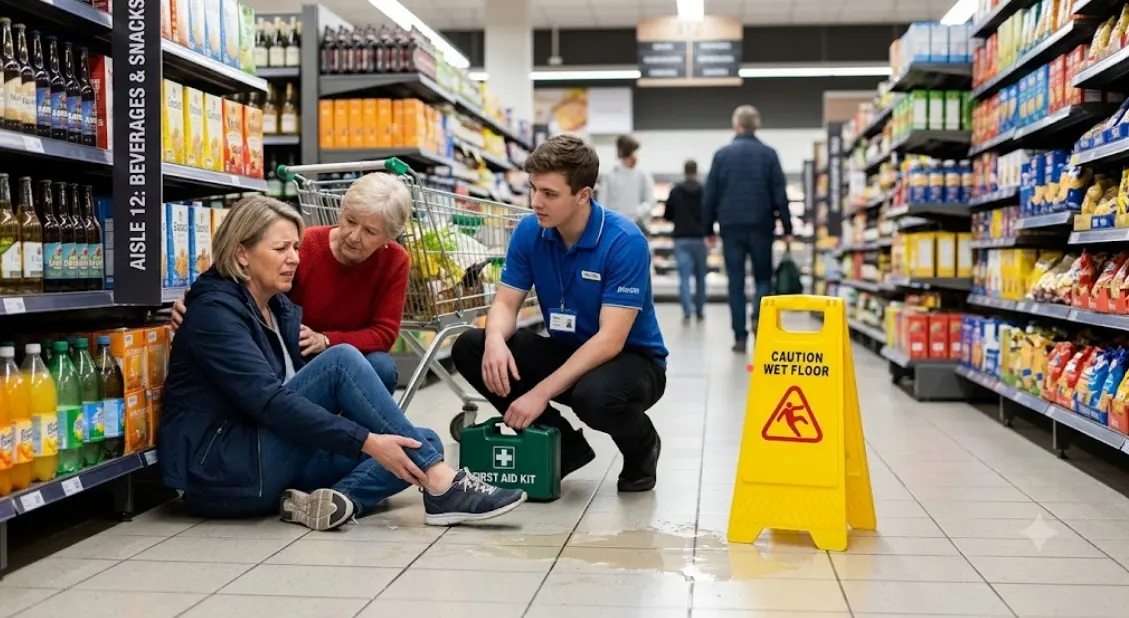
If a customer falls in a shopping mall, restaurant, hotel, or office building in China, the incident alone does not decide whether the venue operator is liable. Civil Code Article 1198 asks whether an operator or manager failed a safety-protection obligation and that failure caused harm. A sound response starts with care for the injured person and an accurate record of the scene.
This guide is for venue operators and property managers handling a fall linked to a floor, stair, entrance, or maintained area. It explains what to preserve, how to identify who controlled the area, and how to keep the later review tied to contemporaneous evidence. Liability depends on the facts; a general safety checklist does not decide an individual claim.
Make the area safe and record what changed
Arrange appropriate medical help first. If the person may be seriously hurt, contact emergency services. Keep other visitors away from any continuing hazard. Before moving a mat, cleaning a spill, or restricting access, have a staff member record the condition if that can be done safely and without delaying aid. Then address the hazard promptly. Record when the area was isolated, cleaned, repaired, or reopened, and who performed each step. Do not recreate the scene afterward.
Take clear photographs or video of the precise location, walking surface, stairs or threshold, lighting, warning signs, mats, nearby objects, and surrounding route. Record the date and time and identify who took each image. If the floor is wet, note what staff actually observed and when; do not guess how long it had been wet. Avoid turning a first response note into a conclusion about fault.
Identify the operator and manager for that exact area
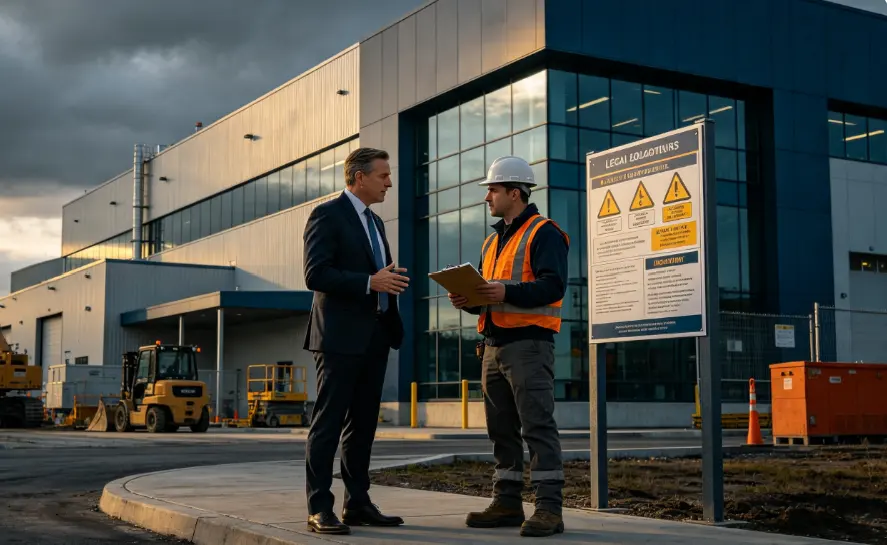
A customer-facing site may involve a shop or hotel operator, a building owner or property manager, and separate cleaning, security, or maintenance contractors. Record which entity controlled the precise area where the fall occurred and which staff or contractor had responsibility at that time. Preserve the relevant lease, property-management agreement, cleaning scope, maintenance work order, and duty roster. A building owner’s name alone does not establish who managed the area or what each party knew.
Civil Code Article 1198 applies to operators and managers of business and public venues, including hotels, malls, stations, sports facilities, and entertainment venues. It makes liability depend on failure to meet the safety-protection obligation that caused harm. The facts about control, the condition, and the response therefore matter more than a generic statement that the site was “safe.”
Preserve records that show the condition before and after
- Export relevant CCTV promptly, including footage before and after the reported fall. Preserve the original file and metadata, note camera locations and any clock offset, and log who exported or accessed the footage. Keep the unedited source; do not circulate it beyond people handling the incident.
- Retain inspection, cleaning, and maintenance logs for the area, including time-stamped entries, work orders, completion notes, and records of any warning signs or temporary barriers.
- Preserve staff schedules, contractor assignments, safety procedures, training records relevant to the task, prior reports about the same location, and communications about the condition.
- Keep the original incident report and each later supplement separately. Record who supplied each fact, when it was recorded, and whether it is a direct observation or a second-hand account.
Do not overwrite footage, backdate a log, or ask witnesses to align their accounts. If a record is missing, document that fact and what retention process applied. You can correct a present hazard while preserving the evidence of how the scene looked before the correction.
Build a dated account, not a liability conclusion
Prepare a chronology showing when the customer was last seen before the fall, when staff learned of it, who attended, what they observed, what assistance was offered, what evidence was saved, and when the area changed. Keep the customer’s own description distinct from staff observations and video. Preserve available contact details and communications securely and limit access to personnel who need them for the response.
For later legal review, organize the material around several questions: What condition allegedly caused the fall? When did it arise, and who could inspect or address it? Were warnings or barriers present? What did the operator’s routine require, and what was actually done? Does the evidence connect an identified failure to the injury? Civil Code Article 1173 also allows a court to reduce liability where the injured person’s own fault contributed. Neither that rule nor the venue’s records make the outcome automatic.
What published court cases show
In a Supreme People’s Court collection of Civil Code implementation cases, a visitor slipped on a wet mat at a residential complex. The property manager had agreed to the play equipment, handled cleaning, failed to clear the wet mat or warn visitors, and was found at fault; the visitor’s own carelessness also mattered to the allocation. The published facts illustrate why records about control, cleaning, warnings, and timing can matter.
A later Supreme People’s Court typical case reached a different result after a restaurant visitor fell on exterior steps: video and weather evidence showed no rain, snow, ice, or water, while the visitor had been looking down at a phone. The court found no fault by the restaurant or property manager on those facts. These decisions are examples, not fixed rules or predicted outcomes. Together they show why an incident location by itself is not enough to establish liability.
Keep third-party incidents separate
If another person, rather than the condition of the premises, directly caused the injury, Article 1198’s second paragraph assigns primary tort liability to that person and may impose supplementary liability on an operator or manager that failed its safety obligation. That requires a separate factual analysis. This article focuses on falls linked to the condition or maintenance of the venue; see the separate guide to third-party incidents at a venue for the visitor’s evidence and claim questions.
Coordinate the response
Use one designated contact for the visitor, property manager, contractors, and insurer. Give accurate information about the response and next contact point without speculating about cause or promising a particular legal outcome. Notify insurers within the policy’s requirements and preserve the policy and notice. If a claim is made, have counsel review the incident chronology and source records before the company gives a detailed position. Correct any ongoing safety problem and keep a separate record of the corrective action.
Primary legal sources
- Civil Code, Articles 1198 and 1173.
- Supreme People’s Court, Typical Civil Cases Implementing the Civil Code (Second Batch), including a case involving a wet play-area mat and property-management duties.
- Supreme People’s Court, Fourth Batch of Typical Civil Cases, including a restaurant-stair fall case addressing the reasonable limits of venue safety obligations.
This article provides general information for venue operators and property managers. The responsible entity, applicable duty, causation, evidence, and any allocation of fault depend on the specific incident.