
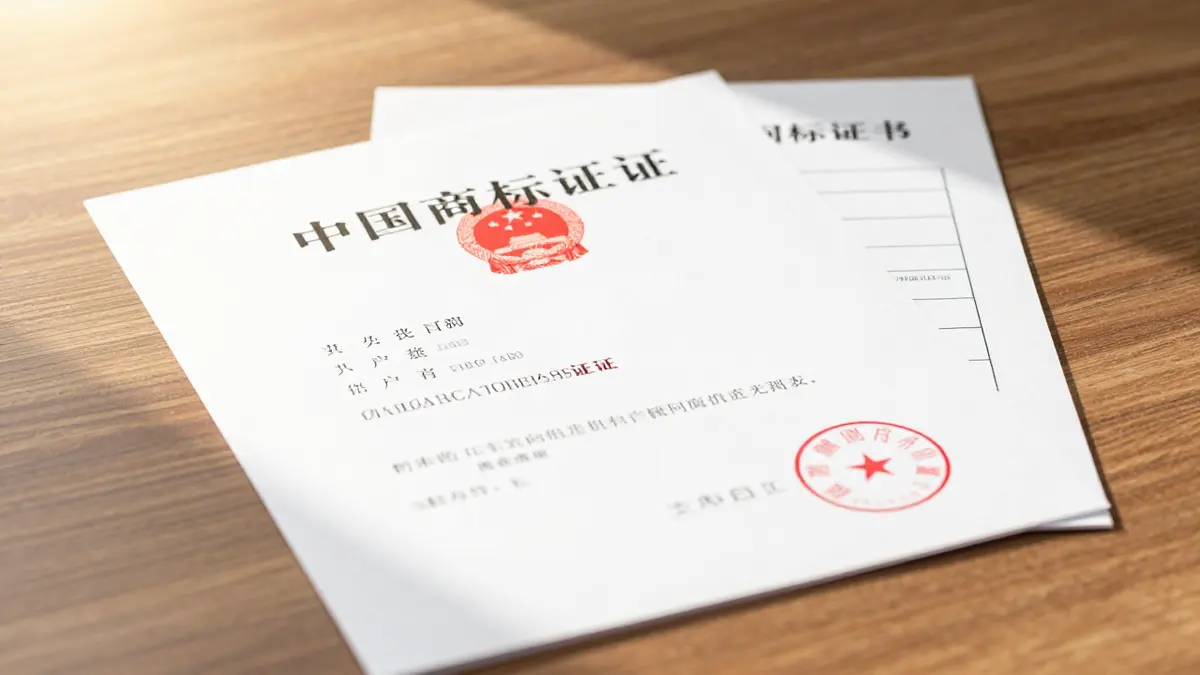
China’s trademark system rewards early filing, but a registration strategy should start with the brand’s real products, Chinese-language identity, and routes to market. A foreign registration or long history of use abroad does not itself create a China registration. At the same time, China’s law recognizes certain prior rights and earlier use, so the first-to-file principle is not an answer to every conflict.
This guide explains how international businesses can search and file strategically, manage oppositions and renewals, and prepare evidence for enforcement. It describes the Trademark Law currently in force as of November 2026 and flags the revised law scheduled to take effect on 1 January 2027. Check the law and CNIPA procedures again before acting, especially for matters that cross that effective date.
Start with the China market and brand architecture
List the products and services the business expects to sell, make, license, or distribute in China over the next several years. Identify the owner that should hold each mark, including any parent, local subsidiary, licensee, or distributor. A filing in the wrong group company can complicate later transfers, enforcement, financing, or a business sale.
Search the Latin-character brand, logo, Chinese-language name, transliterations, abbreviations, and important product lines. China’s system is territorial: a registration in another country does not automatically protect the mark in mainland China. Search results are a screening tool, not a guarantee. Similarity, designated goods, prior rights, and the record as a whole affect registrability.
Plan the mark and goods together. A word mark and a distinctive logo may need separate applications. Select goods and services that match the intended business and the relevant Chinese classification descriptions. China applies a detailed subclass structure; goods appearing in the same international class do not always receive identical practical coverage. Do not copy a broad specification from another country without checking the Chinese descriptions and subclass relationships.
File before launch, while preserving evidence of earlier use
File key marks before public launches, trade fairs, supplier circulation, or distribution negotiations where practicable. Registration gives an enforceable exclusive right within the approved mark and goods scope, and a registration generally lasts ten years from its registration date, with renewal available under the law. Build a renewal calendar and keep the registered owner’s name and address current.
Early filing matters, but “first to file” is not absolute. The current Trademark Law bars applications that damage another party’s existing prior rights and bars bad-faith preemptive registration of a mark already used by another party and having a certain influence. It also addresses agency, representative, contractual, and other relationships that may reveal an applicant’s knowledge of someone else’s mark. A business facing a squatting application should preserve evidence of the relationship, earlier use in China, market exposure, and the applicant’s knowledge; the available claim depends on the facts and the legal ground.
Under the current Trademark Law, a foreign individual or enterprise applying for registration or handling other trademark matters in China must entrust a legally established Chinese trademark agency. The 2026 revision changes this representation rule: it requires an agency where the foreign applicant has no habitual residence or place of business in China. An international Madrid System registration designating China can be an alternative route for eligible owners, but it is not a substitute for checking the designated goods, status, refusals, and local enforcement needs. Compare the route, ownership, portfolio, and deadline implications before filing.
Prepare the application and track each deadline
Before filing, confirm the applicant’s legal name and address, the exact mark representation, the goods and services, any priority claim, and the authority granted to the representative. Keep copies of the filed application, receipt, mark image, specification, correspondence, and proof of filing. Make sure internal teams know which entity owns the application and who must receive official notices.
CNIPA examines applications and may issue a refusal or request clarification. If a mark is preliminarily approved, it is published for a three-month opposition period under the current law. Eligible prior-right holders and interested parties may oppose on specified grounds; any person may oppose on certain public-interest or registrability grounds. An opposition should identify the legal basis and connect admissible evidence to the goods, earlier right, market, and conduct at issue. Keep the filing deadline on a monitored calendar rather than relying on a distributor or local office to forward a notice.
If an opposition is filed against your application, the Trademark Implementing Regulations currently provide a 30-day period for the applicant to respond after receiving the opposition materials. A response is not mandatory for a decision, but missing the deadline can forfeit the chance to put the applicant’s evidence and arguments before CNIPA. The relevant deadline is the one in the actual notice and the rules applicable to that proceeding; obtain qualified advice promptly.
Use the mark and keep the record current
Registration is not a set-and-forget asset. Use the mark as registered, keep dated examples of real commercial use in China, and retain invoices, sales records, advertisements, product packaging, distribution agreements, and license records. Under the current law, a registration may be vulnerable to cancellation if the mark has not been used for three consecutive years without a justifiable reason. Evidence should show the mark, goods, territory, timing, and commercial context, rather than merely internal plans or a trademark certificate.
Changes to the owner’s name or address should be reflected in the register. Assignments should be handled through the required CNIPA process and checked for related marks that must move together. A licensing contract should define permitted marks and goods, territory, channels, term, quality controls, audit and reporting duties, and termination steps. The current law says an unrecorded trademark license cannot be asserted against a bona fide third party. Keep quality-control evidence because uncontrolled use can weaken the brand and create disputes.
Build an enforcement file before a dispute
For suspected infringement, preserve the suspected goods and their packaging, purchase records, invoices, shipping documents, seller and platform identifiers, advertisements, product pages, communications, and samples from more than one source where relevant. Record when and how each item was obtained and keep originals. For online material or rapidly changing listings, use a reliable method to preserve the page, URL, time, account information, and transaction path; a screenshot without context may be difficult to authenticate or connect to a seller.
Compare the accused use with the registration certificate and the approved goods. Under the current law, unauthorized use of an identical mark on identical goods is one infringement category; similar marks or goods are addressed where the use is likely to cause confusion. The scope depends on the actual mark, goods, use, and evidence. A trademark registration does not resolve every dispute involving product names, company names, copyright, patents, packaging, or unfair competition, so assess related rights separately.
Depending on the evidence and commercial objective, a rights holder may consider a complaint to market-regulation authorities, civil proceedings, platform procedures, or criminal referral where statutory conditions are met. Civil remedies can include an injunction and monetary relief. Under the current law, damages are assessed by reference to the rights holder’s loss, the infringer’s gains, or a reasonable multiple of trademark royalties, as applicable; statutory damages may be awarded when the amount cannot otherwise be determined, up to RMB 5 million. For intentional infringement in serious circumstances, the court may award punitive damages of one to five times the determined amount. These are legal ceilings and methods, not a prediction of a particular award. Preserve evidence of sales, market impact, costs, notice, and the defendant’s conduct.
Consider customs recordation for cross-border goods
Owners of protected rights may apply to record intellectual property with China Customs. Recordation can give Customs information that may help identify suspect imports or exports, but it does not guarantee detention or replace shipment-specific enforcement planning. Maintain current registration details, product and packaging images, authorized and suspected traders, and useful contact information. The Customs service guide states that a complete recordation application is generally decided within 30 working days and that recordation is valid for ten years, subject to the underlying right and renewal rules. Monitor notices and respond within the period stated by Customs.
Plan for the Trademark Law effective in 2027
A revised Trademark Law was adopted on 26 June 2026 and is scheduled to take effect on 1 January 2027. Until then, the current law remains the operating reference. The revision changes parts of the registration, administration, and enforcement framework, including rules addressing bad-faith or excessive filings and protection of exclusive rights. Businesses with pending applications, oppositions, renewals, or enforcement matters that may continue into 2027 should have counsel check the effective-date and transition provisions rather than assume that the old or new text automatically governs every step.
For a practical portfolio review, prioritize marks that are central to sales, manufacturing, licensing, and customer recognition in China. Confirm who owns each application, which goods are covered, whether the Chinese-language brand is protected, what evidence of use is being retained, and who is responsible for notices and renewals. A focused review before launch or a dispute is usually more useful than relying on a broad class list or reacting only after a conflicting filing appears.
Official sources
- Trademark Law of the People’s Republic of China (2019 revision, current through 31 December 2026).
- CNIPA notice on the revised Trademark Law and its 1 January 2027 effective date; see also the official Chinese text of the 2026 revision.
- Regulations for the Implementation of the Trademark Law.
- China Customs service guide for intellectual-property recordation.
- CNIPA rules on trademark agency supervision.
Related counsel: Browse Intellectual Property lawyers and the national guide to plan filing, opposition, or enforcement work.