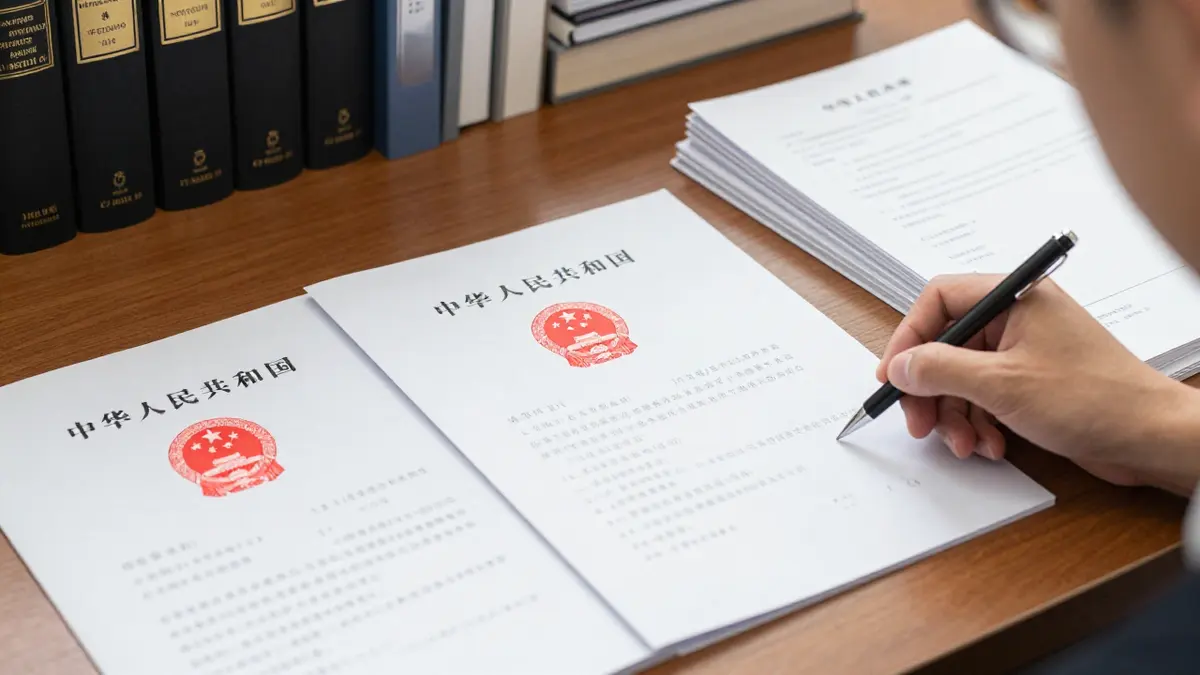
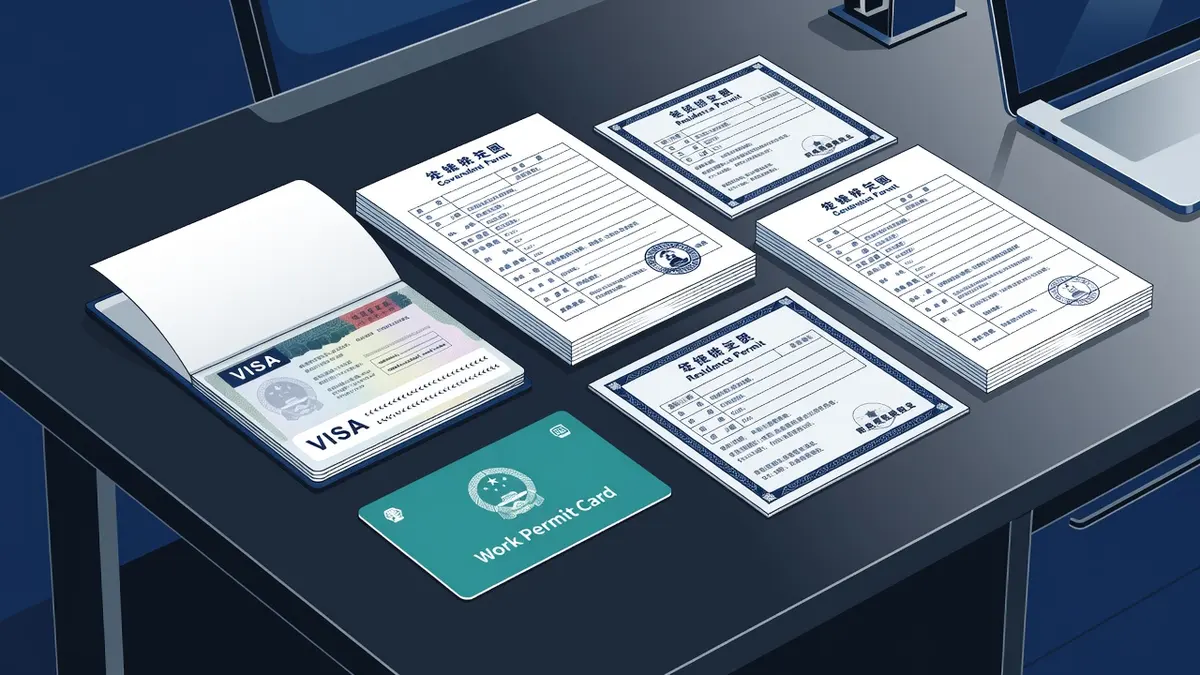
Working in China generally requires more than permission to enter. The employer, job, work location, visa or entry status, work authorization, and residence status must fit the applicable route. A Z visa is commonly used for work-related entry, but the visa itself does not replace the work permit or authorize work outside its stated conditions.
This guide explains the usual process for short and longer assignments, the A/B/C work-permit categories, documents employers may need, and what to check when renewing, changing jobs, or bringing family. National rules and local service procedures can differ, and the required steps depend on the assignment and the worker’s circumstances.
Separate entry permission, work authorization, and residence status
For ordinary employment, the foreign national needs the applicable work authorization and, when required, a work-type residence permit. These answer different questions: an entry visa or visa-exempt entry permits entry or a stay on specified terms; it does not by itself authorize employment. Foreign nationals generally may not work in China without the required work permit and work-related residence status, subject to narrow legal exceptions and special procedures.
Start with the proposed activity, employer, work location, duration, and the person’s current status. Confirm the correct route with the employer’s local work-permit authority and the public security exit-entry administration before travel or work begins. A person already in China should not assume a visitor, student, family, or other residence status can simply be converted into employment status.
Understand the work-permit category without relying on a shortcut
The foreigner work-permit system uses Categories A, B, and C. Broadly, they distinguish high-end talent, professional talent, and other foreign workers admitted under applicable conditions. The authority considers the relevant route and evidence, which can include qualifications, work history, position, remuneration, achievements, and local requirements. The old shorthand that every Category B applicant needs a bachelor’s degree and two years of experience is not a complete statement of the current system.
Do not select a category from a points calculator alone. Ask the employer to check the current national service system and the competent local authority’s application guide. A different application route may apply to recognized high-level talent, certain graduates, short-term assignments, or a person with a special status.
Plan the usual application sequence
For a person applying from abroad, the employer normally initiates the work-permit process and obtains a Notification Letter of Foreigner’s Work Permit. A visa-required applicant generally uses that notice to apply for a Z visa. The notice is not itself a visa or work permit. The exact entry document can depend on nationality, visa arrangements, assignment length, and the approved activity.
For work lasting no more than 90 days, the 2025 national expatriate guide directs the worker to use the Z visa and stay within the work period shown on the visa. For longer work, the worker enters through the prescribed route, completes the local work-permit steps, and applies for a work-type residence permit as required. A foreign national who enters with a visa intending to work and reside in China generally must apply for the residence permit within 30 days of entry. Do not begin work until the applicable authorization is in place.
Since December 1, 2024, work-permit information has been integrated with the social-security-card system, with applications and changes handled online under the national policy. Applicants should follow the current digital process and local instructions rather than expect an older physical-card workflow.
Prepare documents with the employer
Common application evidence includes a valid passport, employment contract or appointment document, proof of education or professional qualifications, work-experience evidence where relevant, a criminal-record certificate, health documentation, and a recent photograph. The employer may also need to provide its registration and position information. The authority can request additional records for the applicant’s category, occupation, or circumstances.
Document authentication rules have changed: for public documents from countries covered by the Apostille Convention, an apostille may be accepted; other documents may require consular certification or another form. Translation, validity periods, medical-examination requirements, and whether an overseas certificate can be used vary by document and locality. Obtain the current checklist before ordering certificates or paying for authentication.
Keep the permit, job, and residence record aligned
Track the expiration dates for both work authorization and residence status. The employer should submit a work-permit extension application within the required pre-expiry window; the 2025 national guide says to apply 30 days before the work permit expires. A foreign national who plans to remain after a residence permit expires generally must apply for an extension 30 days before expiry. Confirm the local submission method and appointment requirements early.
Changes to a passport, position, employer, or work location can require an update or new approval. The national guide gives a 10-working-day period for changes to certain personal information in the work-permit record and a 10-day period for changes to residence-permit information. The correct procedure depends on the change. Do not assume that a new employer may use the old employer’s permit or that permission for one city or role covers another.
Foreigners staying somewhere other than a hotel must generally complete accommodation registration with the local public security authority within 24 hours of arrival; a hotel handles the registration for its guests. Check the process when moving to a new address. Also coordinate tax, payroll, and social-insurance arrangements with the employer based on the actual employment and applicable rules.
Make a separate plan for family members
A spouse or child may need a family-visit visa and, for a longer stay, the corresponding residence status. A dependent’s status does not grant permission to work. A family member who takes a job needs to qualify for and obtain their own work authorization and residence status. Confirm the application sequence, supporting relationship documents, and any document legalization or translation requirements for each dependent.
Treat permanent residence as a separate application
China’s permanent residence status, associated with the Foreign Permanent Resident ID Card, is not an automatic result of holding a work permit for a set period. The National Immigration Administration lists several eligibility routes, each with specific requirements and supporting evidence. An applicant must fit a qualifying route and submit a separate application through the designated public security authority. Review the current official criteria before relying on a long-term residence plan.
Practical checklist
- Confirm the employer, job duties, work location, assignment length, and current immigration status.
- Ask the employer to identify the work-permit category and the current local application route.
- Obtain the work-permit notification and correct entry visa or permission before travel when required.
- Check document validity, translation, apostille or consular certification, and medical requirements against the live checklist.
- Record the deadlines for the work permit, residence permit, passport updates, and accommodation registration.
- Get approval before changing employer, position, or work location; confirm each family member’s status separately.
- Use the National Immigration Administration’s current criteria for any permanent-residence application.
Immigration status depends on the person’s actual activity and current documents. This article provides general information, not legal advice. Confirm the current procedure with the employer and the competent work-permit and exit-entry authorities before travel, employment, or a status change.
Related practical guides
- Working and staying legally in China
- Work-permit Categories A and B
- Work and residence permit process
- Changing employer or cancelling a work permit
- Work-permit document checklist
- Permanent residence eligibility
Primary references
- State Council portal: Guide to Working and Living in China as Business Expatriates (2025)
- 2025 national guide: work-permit and residence-permit validity requirements
- Shanghai government: factors used under the Category A/B points route
- Ministry of Human Resources and Social Security notice on integrating work permits with social-security cards
- National Immigration Administration: permanent-residence eligibility and application guide
- Rules for the Administration of Employment of Foreigners in China
- National guide: work-permit application documents, procedures, and social insurance