
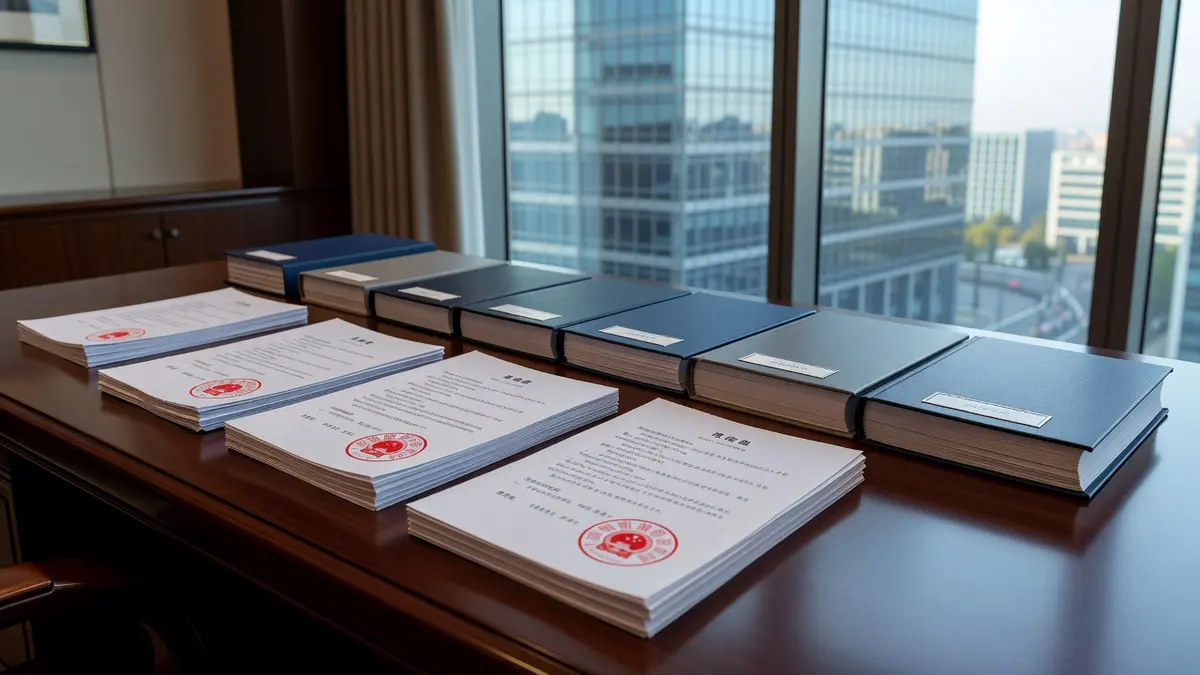
Negotiating a commercial lease in China involves more than comparing rent. A foreign business should confirm the signing entity, the lessor’s authority to lease, and whether the permitted use fits its operation. The contract should assign responsibility for handover, fit-out, operating charges, repairs, interruptions, and exit. Set the deposit amount, permitted deductions, accounting process, and return deadline instead of leaving repayment to an undefined later settlement.
China’s Civil Code requires a written lease for a term longer than six months and limits a lease term to twenty years; the excess is invalid. It also says failure to register a lease where required does not by itself affect validity. That does not resolve every property-use, registration, or local compliance question. The review depends on the premises, the planned operation, the parties’ authority, and the documents available before signing.
Verify the premises and the lessor’s authority
Identify the exact unit, floor area, boundaries, shared areas, parking, storage, and any equipment included in the lease. Compare the proposed premises with the ownership certificate or other lawful source-of-title documents. Confirm that the person signing for the owner has authority to lease, and ask for evidence of any agency, co-owner, mortgagee, or superior landlord consent that is relevant to the transaction. If the lessor is a company, check its current legal name and the signatory’s authority.
Ask how the premises are recorded and what uses are permitted under the property documents and applicable local requirements. A contract clause saying “office” or “commercial” does not itself establish that every planned activity is permitted. Before committing to a location, confirm that the intended business can obtain the registrations, licenses, fit-out approvals, and utility capacity it needs at that address. Put any unresolved approval or feasibility condition into the lease or a separate written agreement.
Describe delivery and permitted use
Set a handover date and attach a signed condition report with photographs, meter readings, keys, access cards, equipment, and known defects. Record who must repair each defect and by when. The Civil Code lease provisions require a lessor to deliver the leased property as agreed and keep it fit for the agreed use during the lease term. A clear baseline helps distinguish existing damage from later wear or tenant-caused damage.
Describe the permitted use with enough detail to cover the actual operation, such as offices, showroom, storage, or customer service, where applicable. Allocate responsibility for obtaining approvals and for delays caused by the premises, the tenant’s fit-out, or a regulator’s decision. The tenant should not assume that the lessor’s promise alone guarantees that a permit will issue. If a key approval is a condition to opening, state what happens to rent, the deposit, fit-out costs, and termination rights if it is refused.
Make rent, charges, and the deposit measurable
Specify the rent amount, currency, tax treatment, invoice requirements, payment account, due dates, adjustment formula, and any rent-free fit-out period. Separate rent from property management fees, utilities, heating or cooling, parking, common-area charges, and taxes. Identify which charges are fixed, which are measured by consumption, and what supporting statements the lessor must provide. The Civil Code addresses rent timing and permits a lessor to seek payment and, after a reasonable period, termination when rent is unpaid without a valid reason.
For the security deposit, write down the amount, who holds it, the obligations it secures, and each permitted deduction. Provide for written notice and supporting evidence for any deduction, a process to dispute an item, and a deadline to return the undisputed balance after surrender and reconciliation. Clarify how the deposit is handled if the lease ends early, the premises are transferred, or the parties disagree about repair costs. Do not rely on an informal message or an undefined “final settlement” as the only refund term.
Allocate fit-out, repair, and operating duties
Attach approved plans for alterations and identify which party obtains design, construction, fire-safety, environmental, or other approvals that apply to the project. State when the tenant may begin work, whether the lessor must approve contractors, who pays for building-system changes, and what must be removed or restored at the end. Under the Civil Code, tenant improvements generally require the lessor’s consent; make that consent written and specific to the work and plans.
Allocate routine maintenance, structural repairs, emergency repairs, and access for inspection. The Civil Code places a maintenance duty on the lessor unless the parties agree otherwise and provides a process for tenant-requested repairs. Spell out notice channels, response times, emergency access, rent adjustment during material loss of use, and responsibility when damage results from a party’s conduct. Keep work orders, approvals, contractor invoices, and completion records.
Plan for assignment, subletting, and disruption
State whether the tenant may assign the lease, share occupation with an affiliate, or sublet part of the premises. The Civil Code generally requires the lessor’s consent for a sublease; define the request process, response deadline, information required, and any permitted affiliate occupancy in advance. Clarify whether a change in the tenant’s corporate structure or a sale of the business requires consent.
Address what happens if a third party asserts a property right, an authority seals the premises, or the premises become unusable for a reason outside the tenant’s control. The Civil Code provides relief in specified situations, including certain third-party claims and property disputes or official seizure. The contract should also set notice, mitigation, rent suspension, relocation, and termination procedures that fit the business. A change in ownership of the leased property does not by itself invalidate the lease, but the tenant should confirm where rent and notices must be sent after a transfer.
Document exit and deposit return
Set renewal notice dates, any option exercise method, and the rent or formula for a renewal period. Explain how either party may terminate for breach, what notice and cure period apply, and how termination for convenience is handled if offered. The lease term cannot exceed twenty years; put any renewal arrangement in writing and check the permitted term when it is exercised.
Before move-out, schedule a joint inspection and compare the premises with the signed handover report. Record meter readings, keys, access cards, agreed repairs, and any disputed condition. Require an itemized statement for deductions with supporting invoices or other evidence, and state when the remaining deposit must be repaid. Keep proof of notice, payment, handover, and refund requests. If the lessor withholds the deposit, a dated file of the contract, payment records, inspection evidence, and correspondence will help counsel assess the available claim and forum.
Commercial lease checklist
- Confirm the contracting tenant, lessor, property record, signatory authority, and exact premises.
- Check that planned use and required approvals fit the property and local process.
- Attach a condition report and define the handover date, repairs, and fit-out approvals.
- Itemize rent, taxes, management charges, utilities, adjustment dates, and invoice requirements.
- Set deposit deductions, evidence, dispute steps, and a firm return deadline.
- Agree on subletting, affiliate occupancy, assignment, interruption, renewal, and termination.
- Preserve signed documents, payment records, notices, approvals, and move-in/move-out evidence.
Have local counsel review the premises documents and the final lease against the tenant’s planned operation before the business pays a deposit or begins fit-out work.