China Customs has formally notified your company or customs broker that it proposes to amend or cancel an accepted import or export declaration, and you disagree. Treat this as a separate procedural event from a routine request for documents or a final customs-valuation decision. Under Article 23 of the current Customs declaration rules, Customs must state the proposed change or cancellation, its reasons, and what it requires; a party that objects must act within five working days.
If no objection is filed in that period, Customs may amend or cancel the declaration. This guide helps the importer, exporter, and broker identify the notice, build a field-by-field response from the shipment record, and preserve proof of submission. It does not promise that an objection will be accepted or replace advice on the notice and customs file.
Confirm what Customs has sent
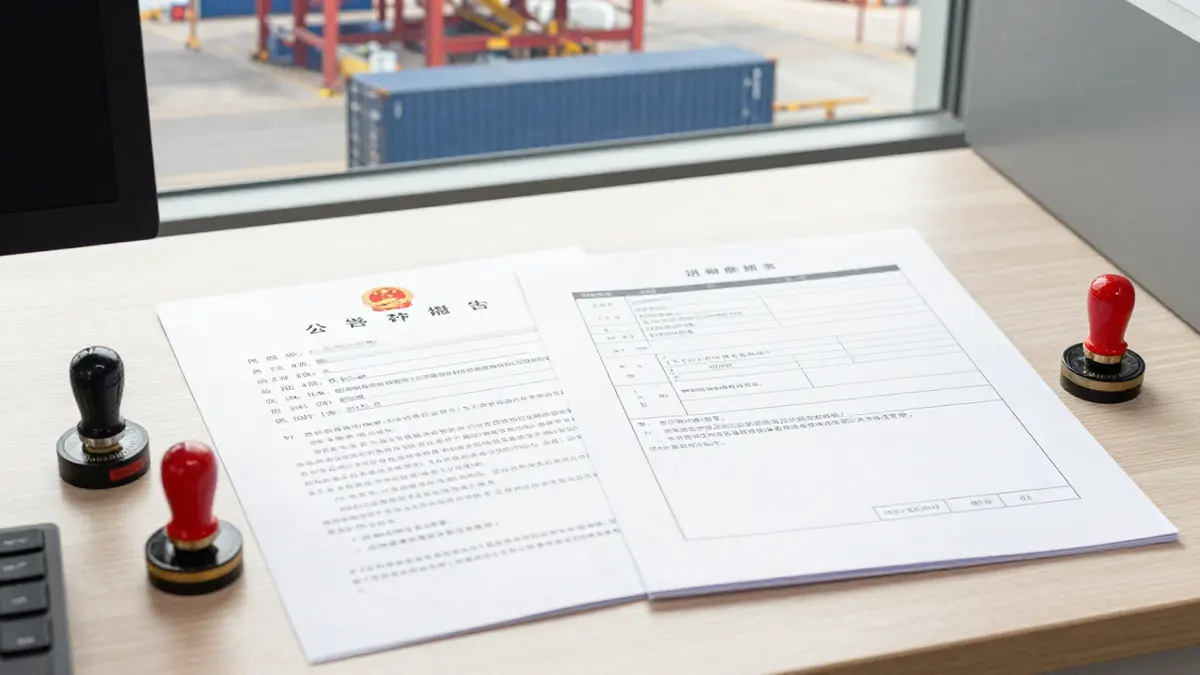
Read the complete notice and identify the accepting Customs authority, declaration number, shipment, party or broker named, proposed field changes, stated reasons, required response, and delivery date. Article 23 of the 2025 Customs declaration rules applies when Customs notifies the consignee or shipper, or its entrusted customs broker, of the content, reason, and requirements for a proposed declaration amendment or cancellation.
Do not treat every customs message as this notice. A request for supporting documents, a question during examination, a proposed customs-value adjustment, a tax decision, and a notice proposing to amend or cancel the declaration may trigger different procedures. Ask PRC customs counsel to classify the document before choosing the response. In particular, a disagreement with a valuation decision is not automatically the same as an Article 23 objection to changing or cancelling the declaration.
Calendar the five-working-day objection period
If the consignee, shipper, or entrusted broker disagrees with the notified amendment or cancellation, Article 23 requires an objection to Customs within five working days. If no objection is submitted within that period, Customs may proceed to amend or cancel the declaration. The regulation does not make an objection an automatic stay or promise that Customs will accept it.
Record when and how the notice was received, who received it, and any deadline stated in it. Give the notice to the company’s customs lead, legal team, and broker the same day. Ask counsel to calculate the final day under the applicable time-counting rules; use an earlier internal filing target. Do not assume that a broker’s request for more time, an informal call, or a separate document submission extends the statutory objection period.
Answer the proposed change field by field
Make a short comparison table before drafting. For each field Customs proposes to change, record:
- What was declared: quote the accepted declaration field and identify the product line, quantity, value, origin, mode, or other data at issue.
- What Customs proposes: reproduce the proposed entry and the reason stated in the notice.
- What the shipment record shows: cite the source document and page, line, or data field.
- Why the proposed edit or cancellation is disputed: identify the factual mismatch, applicable supporting document, or procedural point that needs resolution.
- What response is requested: state clearly which proposed change or cancellation the party objects to and what record should be considered.
Keep the objection tied to the reasons and requirements in the notice. A broad statement that the filing is correct may not address a specific issue such as the product description, quantity, transport record, origin, or price.
Assemble the shipment evidence
Preserve the accepted declaration and its electronic receipt, the complete notice and delivery record, the broker’s filing instructions, and the version of each document used to prepare the declaration. Depending on the disputed field, the response file may include:
- the contract, invoice, packing list, bill of lading or airway bill, and payment records;
- product specifications, catalogues, photographs, production or inspection records, and quantity reconciliations;
- origin, licence, inspection, or other supporting certificates relevant to the declaration;
- communications between the importer or exporter and its broker about the disputed entry; and
- a concise chronology showing when the goods moved, when documents were issued, and when the declaration was accepted.
Keep native electronic records and identify the source of later explanations or translations. If the issue is a price adjustment under a trade practice in which a temporary price was declared and settlement follows inspection results or market price, Article 21 calls for the contract, invoice, packing list, transport document, payment proof, and other material showing the real transaction and why the declared price was accurate.
Coordinate the importer, exporter, and customs broker
The current regulation allows the consignee or shipper and an entrusted customs broker to handle the relevant customs declaration procedures. Confirm who received the notice and who will submit the objection. The company should approve the factual position and supporting documents, even if the broker sends the filing. Give the broker one verified response package and require a submission receipt or system acknowledgement showing the date and materials filed.
Use the submission channel and instructions in the notice, and confirm with the receiving Customs office how it records an Article 23 objection. Retain the final response exactly as submitted, every attachment, confirmation, follow-up request, and Customs reply. Do not rely on a draft in a broker’s email or an unrecorded telephone call as proof that the objection was filed.
Keep this step separate from other customs procedures
Article 18 states that accepted declarations and supporting documents generally may not be changed or cancelled except in the prescribed circumstances. Article 19 prioritizes amendment over cancellation when amendment is sufficient. Articles 20 to 22 describe particular situations and supporting materials for amendments or cancellations, including certain transport or quantity events, price-settlement arrangements, direct return, technical error, and declarant error.
Article 25 says that where Customs has decided on port-level control and the goods are suspected of smuggling or another customs-supervision violation, the declaration cannot be amended or cancelled until the related procedures are completed. If the notice concerns a valuation adjustment, a suspected violation, or a final administrative decision instead of a proposed declaration amendment or cancellation, ask counsel to identify the applicable response and review route. Do not use the five-working-day objection as a substitute for a separate reconsideration or litigation deadline.
These rules were updated by General Administration of Customs Order No. 277, effective 1 May 2025, which repealed the earlier 2014 declaration-amendment measures. Check the current notice and rule rather than relying on an old broker checklist.
Immediate checklist
- Confirm the notice is a proposed amendment or cancellation under Article 23 and identify its recipient.
- Record the notice’s receipt date and obtain counsel’s calculation of the five-working-day objection deadline.
- Assign one company decision-maker and one broker contact; request same-day circulation of the complete notice and declaration record.
- Prepare a field-by-field comparison supported by the actual shipment documents.
- Submit through the channel confirmed by the notice or receiving Customs office, and keep proof of timely delivery.
- Track any related inspection, valuation, tax, administrative-reconsideration, or suspected-violation procedure separately.
Primary legal source
General Administration of Customs Order No. 277, Customs Declaration Rules for Import and Export Goods, Articles 18–26; effective 1 May 2025. Article 23 governs the five-working-day objection to a notified proposed amendment or cancellation.
This is general information, not an assessment of a particular customs notice. Confirm the notice type, deadline, filer, and supporting documents with PRC customs counsel and the receiving Customs office.