
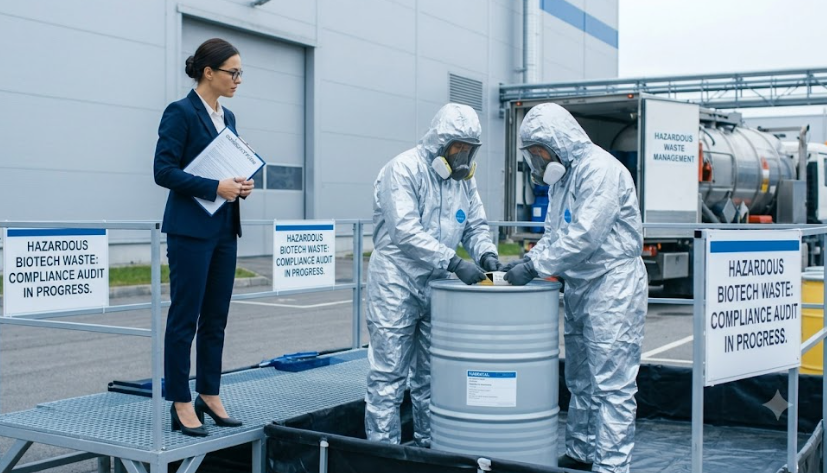
An unannounced inspection can reach sales records, medical-affairs materials, devices, and product-quality files. The first hour should establish who is present, what authority and subject matter the officials identify, who coordinates the company’s response, and how requested records are preserved and logged. A disciplined response helps employees cooperate accurately while keeping the inspection record clear.
China’s drug regulators may inspect drug research, manufacturing, distribution, and use, including relevant service providers. Market-regulation authorities investigating suspected unfair competition have separate statutory powers. This field card gives sales and medical-affairs teams a practical sequence for either kind of administrative inspection, with escalation points for counsel and quality leaders.
Start with the type of inspection
Do not assume every unannounced visit has the same legal basis. A drug-regulatory inspection may concern product quality, promotion, distribution, manufacturing, or related services. A market-regulation investigation may concern suspected unfair competition, including commercial bribery. The agency, stated subject, records requested, and legal authority matter. Ask the officials to identify themselves and explain the inspection’s scope; record the details and promptly contact the company’s legal lead.
For drug supervision, the Drug Administration Law authorizes regulatory departments to inspect drug research and development, manufacture, distribution, use, and related activities. Article 99 says relevant organizations and individuals must cooperate and must not refuse inspection or conceal information; officers must show their credentials and protect commercial secrets learned during inspection. The 2026 revised Drug Administration Law Implementing Regulation, effective May 15, 2026, further specifies that inspections may include site entry, sampling, review and copying of documents and electronic data, and certain sealing or seizure measures. It requires at least two law-enforcement officers to present credentials for supervision and inspection.
For an investigation under the 2025 Anti-Unfair Competition Law, effective October 15, 2025, Article 16 lists powers including entering relevant business premises, questioning people, reviewing and copying relevant records, and, subject to approval requirements, sealing or seizing related property or querying bank accounts. Article 17 requires investigated operators, interested parties, and other relevant organizations and individuals to truthfully provide relevant information. The authority’s power and the company’s duty depend on the proceeding and governing law; this card is an operational aid, not a substitute for case-specific advice.
The first-hour response card
Minutes 0–5: receive and record
- Stay calm, do not physically obstruct officials, and notify the designated legal contact and site lead.
- Politely request to see each officer’s credentials and, where presented, the inspection notice or other documents identifying the agency, subject, and scope. Record names, agency, time of arrival, and stated purpose.
- Assign one coordinator to communicate with the inspection team. Ask a second employee to keep a contemporaneous event log. Do not have untrained staff answer on behalf of the company.
Minutes 5–15: organize cooperation
- Ask which business area, products, period, and records are in scope. Route requests to the relevant record owner while avoiding delay or concealment.
- Notify counsel, compliance, and—if product quality, safety, samples, or manufacturing records are involved—the responsible quality leader. Keep sales and medical-affairs managers available to identify systems and document owners.
- Do not tell employees to refuse questions. Each person should listen carefully, answer truthfully within their knowledge, distinguish personal recollection from documents, and say when they do not know or need to check a record.
Minutes 15–45: preserve and track
- Preserve relevant email, chat, expense, event, consulting, distribution, sample, and promotional-material records. Do not delete, edit, backdate, move, or “clean up” files or messages. Do not ask colleagues to align accounts.
- For each document or data set reviewed, copied, sampled, sealed, or taken, record what it is, its location or device, the time, the officials involved, and any receipt or inventory number. Keep copies of records and receipts when the officials permit.
- Do not independently unlock, export, wipe, or alter a device. Ask the coordinator and counsel to clarify the requested access and document the steps taken. Follow lawful directions and raise scope or technical concerns calmly and promptly.
- If officials identify a possible quality or safety risk, immediately involve the quality system. Preserve batch, complaint, adverse-event, distribution, and traceability records; do not let a sales response replace required safety escalation.
Minutes 45–60: close the loop
- Before the team disperses, reconcile the event log against copies, samples, inventories, seals, and receipts. Note any item the company could not provide and the reason, with a named owner and expected follow-up date.
- Ask how and when the authority expects supplemental material, and record the contact channel and deadline. Do not promise conclusions or provide estimates as established facts.
- After officials leave, preserve the log and all related records, prepare a factual chronology, identify employees interviewed and systems accessed, and have counsel coordinate any follow-up. Remind staff to preserve evidence and avoid speculation or public commentary.
What the coordinator should say
Use simple, accurate language: “We will cooperate. May I record your credentials and the stated scope so I can direct the request to the right record owner? Our legal and quality contacts are being notified. I will keep a log of the materials reviewed or copied and provide any requested follow-up through the designated contact.” This is a process statement, not a limitation on the officials’ lawful powers.
Employees should not guess, speculate about colleagues’ motives, or describe a document they have not reviewed. If a question is unclear, ask for clarification. If a person does not remember, they should say so. If the relevant information sits in a system or with another team, identify the owner and help retrieve it. Truthful, precise answers reduce avoidable inconsistencies.
Common mistakes to avoid
- Deleting chats, changing files, or asking others to remove material after officials arrive.
- Refusing to cooperate categorically, physically blocking entry, or delaying while the company debates the merits of the investigation.
- Giving a single employee uncontrolled access to systems or records without recording what was accessed or copied.
- Making broad statements such as “we never do that” before checking relevant records, or treating a preliminary explanation as a final legal position.
- Mixing a drug-quality or patient-safety issue into a commercial-bribery response without immediately involving the quality and safety teams.
- Assuming that every regulator visit is a criminal search, or assuming that administrative inspection rules are identical across agencies.
Prepare before officials arrive
Keep a current call tree with legal, compliance, quality, information technology, human resources, and site management contacts. Identify trained coordinators for each office and maintain a simple evidence log template. Map where sales and medical-affairs records are stored, including approved promotional materials, event files, consulting agreements, expense support, sample records, and relevant chat or email systems. Set retention and legal-hold procedures so staff know how to preserve data without improvising.
Run short tabletop exercises with sales and medical-affairs teams. Practice credential recording, routing questions, locating records, preserving devices, escalating quality concerns, and preparing a factual chronology. After each exercise or real inspection, update the contact list and process based on what the team learned. The goal is controlled, truthful cooperation and a reliable record of what happened.
Read next: Pharma anti-corruption investigations · Life Sciences & Healthcare Blog