 Free Consultation
 Contact Us
Choosing the Right Court for Traffic Accident Lawsuits in China: A Practical Guide
When a traffic accident occurs in China, one of the first legal questions that arises is which court has jurisdiction to hear the resulting lawsuit. The choice of court can significantly affect the outcome of a case, influencing everything from the applicable legal standards to the likelihood of obtaining a favorable judgment. Under the PRC Civil Procedure Law, traffic accident litigation may proceed in multiple possible venues, and understanding the rules governing court jurisdiction is essential for both plaintiffs and defendants.
Jurisdiction Rules Under the Civil Procedure Law
Article 29 of the PRC Civil Procedure Law provides that tort actions, including traffic accident claims, may be brought in the court of the defendant's domicile or the place where the tortious act occurred. In the context of traffic accidents, the place where the tortious act occurred is typically the location of the collision itself. However, the Supreme People's Court's judicial interpretation on the application of the Civil Procedure Law clarifies that the place where the tort occurred includes both the place where the tortious act was committed and the place where the harmful result occurred. This distinction can be significant in cases involving multivehicle accidents spanning multiple jurisdictions or accidents where the injured party seeks medical treatment in a different city. Additionally, if the defendant operates a business or maintains a regular residence in a different location, the plaintiff may have the option to file suit in that jurisdiction as well.
Forum Shopping Considerations
The availability of multiple possible venues creates strategic opportunities for plaintiffs. Courts in different regions may apply different standards for calculating damage awards, particularly for non-economic losses such as emotional distress damages under Article 1183 of the PRC Civil Code. Some courts apply standardized compensation schedules based on local per capita income levels, while others exercise broader discretion. Plaintiffs should consider the local court's case processing times, historical damage award levels, and familiarity with traffic accident litigation. For accidents involving parties from different provinces, the plaintiff may have the additional option of filing in the defendant's home province, which may affect the convenience of the litigation and the enforceability of any resulting judgment.
Evidence Requirements and Documentation
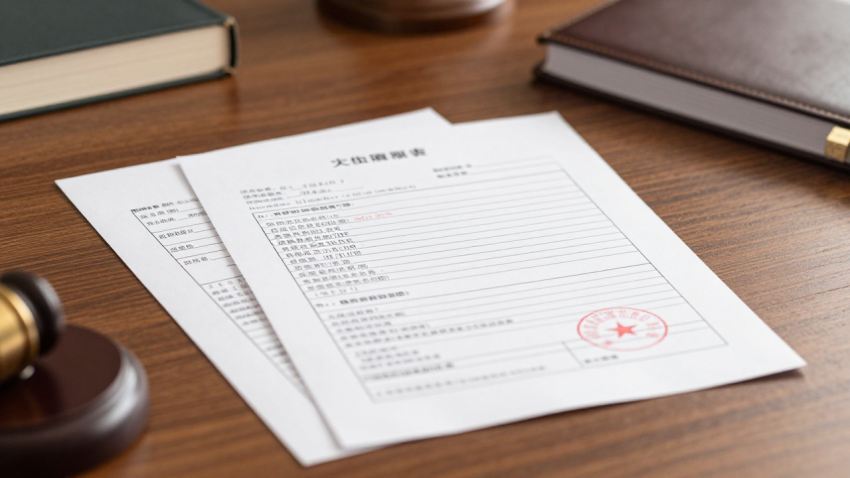
Regardless of which court hears the case, the plaintiff must submit certain core evidence to establish liability and damages. The traffic police accident determination letter is the primary document establishing fault, and its findings are generally given significant weight by Chinese courts. Medical records, including hospital admission records, treatment summaries, and discharge instructions, document the nature and extent of injuries. Medical expense receipts, transportation receipts for medical visits, and proof of lost income from the plaintiff's employer establish quantifiable economic losses. In cases involving permanent disability, a forensic disability assessment conducted by a licensed appraisal institution is required to establish the disability grade, which directly affects the compensation calculation.
Insurance Considerations in Litigation
When choosing a court for a traffic accident lawsuit, plaintiffs should also consider the insurance implications. China's mandatory traffic accident liability insurance provides coverage for personal injury up to 180,000 RMB per accident. Beyond this, commercial third-party liability insurance may provide additional coverage. The insurance company is typically joined as a co-defendant in the lawsuit, and the court will determine the insurance company's liability within the policy limits. Different courts may have different practices regarding the joinder of insurance companies and the allocation of damages between insurance coverage and the defendant's personal liability. Plaintiffs should also consider whether the defendant has sufficient assets to satisfy any judgment beyond the insurance coverage, as this may affect the choice between courts with different enforcement track records.
Time Limits and Procedural Steps
The statute of limitations for filing a traffic accident lawsuit in China is three years from the date the victim knew or should have known of the injury. Within this period, the plaintiff must prepare and file the complaint, gather supporting evidence, and arrange for service of process on the defendant. If the defendant is located in a different province, service of process may take additional time through the cross-province judicial assistance system. Once the court accepts the case, the standard trial period for simple procedures is three months, and for standard procedures is six months. Appeals to the next higher court must be filed within 15 days of the judgment being served. Yao Xihong at Hubei Yuanliu Law Firm in Xiantao has extensive experience handling traffic accident litigation in Hubei courts and can advise clients on the optimal venue for their claims and the evidence strategies most likely to succeed.
Dispute Resolution Application Notes
I document scope, assumptions, and decision rights at engagement start so foreign clients know what will be filed, who must approve, and when silence becomes a missed deadline.
I treat bilingual consistency as a risk control: chops, authority documents, and English summaries must tell the same commercial story.
Foreign individuals and companies typically need three workstreams in parallel: factual chronology, authority paperwork, and remedy selection. I keep those streams visible in status notes so headquarters can decide without re-reading the entire file. Where local counterparties rely on relationship pressure, I re-anchor discussions to contract text, statutory rights, and verifiable performance records. Fee arrangements, conflict checks, and confidentiality boundaries are confirmed before substantive drafting or filings begin. After key milestones I deliver a short handover: decisions made, open conditions, filing receipts, and calendar items for renewals or enforcement. This operating rhythm reduces repeat disputes and keeps institutional knowledge with the client rather than trapped in chat history.
- ⚖️ Written scope and remedy map
- 📜 Bilingual document control
- 🛡️ Deadline and limitation tracking
- 💼 Enforcement and settlement options in parallel
Operational Checklist for Foreign Readers
I treat bilingual consistency as a risk control: chops, authority documents, and English summaries must tell the same commercial story.
I prefer early written notices and clean evidence indexes over informal WeChat-only chains when the amount or regulatory exposure is material.
Foreign individuals and companies typically need three workstreams in parallel: factual chronology, authority paperwork, and remedy selection. I keep those streams visible in status notes so headquarters can decide without re-reading the entire file. Where local counterparties rely on relationship pressure, I re-anchor discussions to contract text, statutory rights, and verifiable performance records. Fee arrangements, conflict checks, and confidentiality boundaries are confirmed before substantive drafting or filings begin. After key milestones I deliver a short handover: decisions made, open conditions, filing receipts, and calendar items for renewals or enforcement. This operating rhythm reduces repeat disputes and keeps institutional knowledge with the client rather than trapped in chat history.
- ⚖️ Written scope and remedy map
- 📜 Bilingual document control
- 🛡️ Deadline and limitation tracking
- 💼 Enforcement and settlement options in parallel
Risk Controls Before Escalation
I prefer early written notices and clean evidence indexes over informal WeChat-only chains when the amount or regulatory exposure is material.
I convert complex Chinese procedure into a dated checklist with owners for translation, notarization, and internal sign-off across time zones.
Foreign individuals and companies typically need three workstreams in parallel: factual chronology, authority paperwork, and remedy selection. I keep those streams visible in status notes so headquarters can decide without re-reading the entire file. Where local counterparties rely on relationship pressure, I re-anchor discussions to contract text, statutory rights, and verifiable performance records. Fee arrangements, conflict checks, and confidentiality boundaries are confirmed before substantive drafting or filings begin. After key milestones I deliver a short handover: decisions made, open conditions, filing receipts, and calendar items for renewals or enforcement. This operating rhythm reduces repeat disputes and keeps institutional knowledge with the client rather than trapped in chat history.
- ⚖️ Written scope and remedy map
- 📜 Bilingual document control
- 🛡️ Deadline and limitation tracking
- 💼 Enforcement and settlement options in parallel

Feel free to send us an email or drop a call for free consultation.