
 Free Consultation
 Contact Us
How to Protect Your Trademark in China
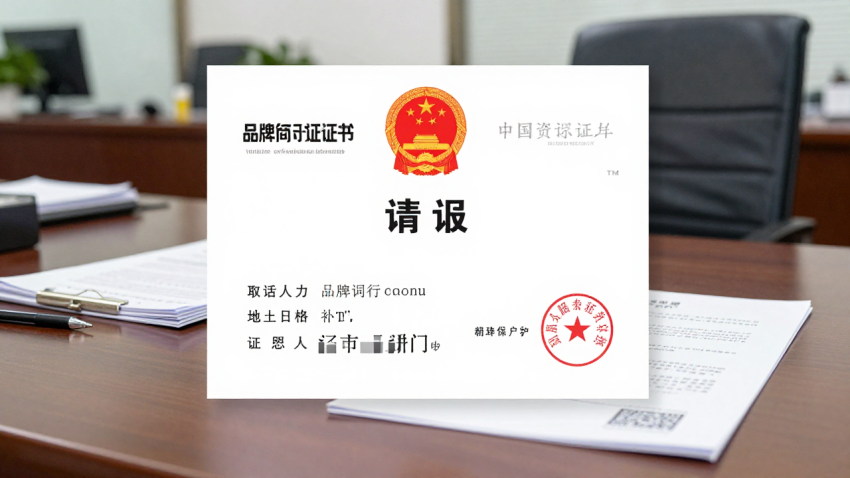
For businesses entering the Chinese market, trademark protection is not a matter of if, but when. China operates under a first-to-file system, meaning the first party to file a trademark application obtains exclusive rights — regardless of who used the mark first. This fundamental difference from common law jurisdictions makes proactive registration the single most important step for any brand owner. With over 7 million trademark applications filed annually, the China National Intellectual Property Administration (CNIPA) processes more trademark registrations than any other office in the world. Understanding the landscape and acting decisively can mean the difference between securing your brand and losing it to a local registrant.
The foundation of Chinese trademark law is the first-to-file principle. Unlike countries such as Canada or the United States, where prior use can establish common law rights, China grants trademark rights exclusively to the first applicant. This creates a significant risk for foreign businesses that delay registration. A distributor, competitor, or even an unrelated third party can register your mark in China, potentially blocking your market entry or forcing you to purchase the mark back at a premium. The lesson is clear: file before you launch, not after. The registration process begins with a comprehensive trademark search through CNIPA's database to identify potential conflicts. While not mandatory, a professional clearance search conducted by a qualified Chinese trademark attorney is strongly recommended, as CNIPA conducts its own formal examination and will refuse marks that conflict with prior registrations or lack distinctiveness. Canadian businesses looking to enter the Chinese market should budget for this search as a standard cost of market entry, not an optional expense.
Once clearance is obtained, the application is filed with CNIPA, which examines the mark for absolute grounds (distinctiveness, non-descriptiveness) and relative grounds (conflicts with prior marks). The standard processing timeline is approximately 6 to 12 months from filing to registration, though this can vary depending on examination workload and whether any office actions or oppositions arise. If CNIPA raises objections, applicants have a limited window — typically 15 days — to respond with legal arguments or amend the specification of goods and services. Upon approval, the mark is published for a three-month opposition period during which third parties may challenge the registration. If no opposition is filed — or if the opposition is successfully overcome — the mark is registered and a certificate is issued. The registration is valid for ten years from the filing date and is renewable indefinitely for successive ten-year periods. One notable feature of the Chinese system is that unlike some jurisdictions that require periodic proof of use, CNIPA does not demand evidence of commercial use to maintain a registration, making portfolio management somewhat simpler for foreign rights holders.
For brand owners seeking protection across multiple jurisdictions, the Madrid Protocol offers a streamlined international route. China has been a member of the Madrid System since 1989, making it possible to designate China in an international application filed through the World Intellectual Property Organization (WIPO). This approach consolidates the filing process and can reduce costs when seeking protection in multiple countries simultaneously. However, Madrid designations remain subject to CNIPA's examination and the same substantive requirements as national applications. One important limitation: if the basic application or registration in the home country is cancelled within five years, the China designation falls with it — a risk known as "central attack." Many practitioners recommend filing directly with CNIPA for China-only protection, particularly when the mark is a core brand asset, as direct filings offer greater independence and flexibility. Canadian businesses should consult with experienced China IP counsel to determine which filing route best suits their commercial objectives and risk tolerance.
Enforcement remains a critical pillar of trademark strategy in China. Despite significant improvements in China's IP enforcement landscape over the past decade, counterfeiting persists in certain sectors and regions. Rights holders should adopt a multi-layered enforcement approach: record the trademark with China Customs to enable border seizure of counterfeit goods; monitor major e-commerce platforms such as Taobao, JD.com, and Pinduoduo for infringing listings; and establish a relationship with a reputable local IP firm capable of handling administrative complaints, civil litigation, and criminal referrals. Chinese courts have become increasingly willing to award substantial damages in trademark cases, particularly where the infringement is willful or involves well-known marks. The introduction of punitive damages in the 2019 amendment to the Trademark Law allows courts to award up to five times the actual damages in cases of bad-faith infringement. Administrative enforcement through the local Market Supervision Administration remains the fastest and most cost-effective route for addressing clear-cut counterfeiting, with raid actions often yielding results within weeks. A comprehensive strategy combining registration, monitoring, customs recording, and enforcement readiness will give brand owners the strongest possible position in the world's second-largest economy. For Canadian companies, partnering with a dedicated China IP team that understands both the legal framework and the practical realities of enforcement on the ground is the single best investment they can make in protecting their brand assets in China.

Feel free to send us an email or drop a call for free consultation.
Related Legal Topics




Other lawyers have the same expertise

Qinglei Wang is a Chinese lawyer based in Shandong with extensive experience. Call or message the attorney through...

Wenqiao Chen is a Chinese lawyer based in Shandong with extensive experience. Call or message the attorney through...

Jingfang Guo is a Chinese lawyer based in Shandong with extensive experience. Call or message the attorney through...

Yan Lu is a Chinese lawyer based in Shandong with extensive experience. Call or message the attorney through the c...

Feng Gao is a Chinese lawyer based in Shandong with extensive experience. Call or message the attorney through the...

Hanlu Yang is a Chinese lawyer based in Shandong with extensive experience. Call or message the attorney through t...
Comments