 Free Consultation
 Contact Us
Trademark Protection in China: A Strategic Guide for International Brands
This article is adapted from the 66law.cn legal knowledge resource on trademark registration and intellectual property protection in China.
Why Registration Matters
China operates a first-to-file trademark system. The first party to register obtains exclusive rights regardless of prior use. Early registration is essential for any international brand doing business in China. Failure to register can result in brand squatting.
- 🔑 First-to-File Rule — Registration creates priority over use-based rights
- 🛡️ Exclusive Rights — Registered marks receive 10-year renewable protection nationwide
- ⚠️ Squatting Risk — Unregistered foreign brands are frequently targeted
Registration Process
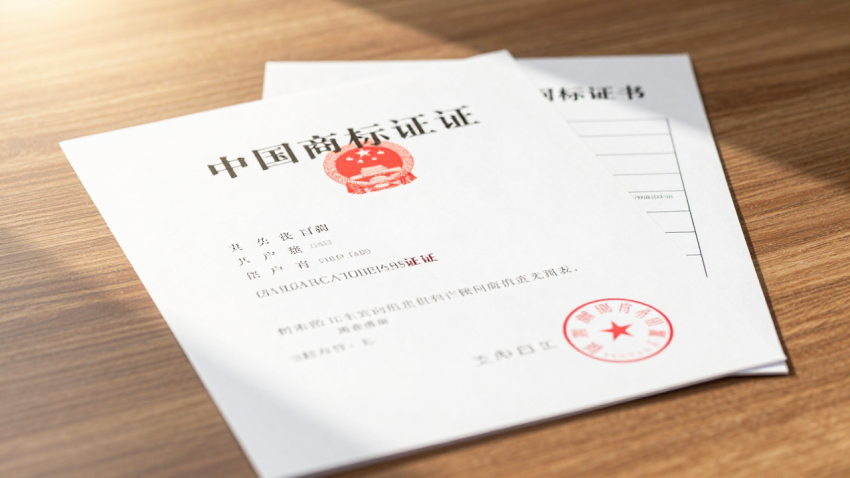
The process takes 6-12 months: preliminary search, application filing with specimen and classification, formal and substantive examination, three-month opposition period, and certificate issuance.
Enforcement
Registered owners can pursue administrative complaints, civil litigation, criminal complaints, and customs recordation. Damages may include injunctions, actual losses or infringer profits, and up to RMB 5 million in statutory damages.
'International Trademark Registration Strategies
Foreign companies seeking trademark protection in China have several registration pathways. The direct filing route involves submitting an application through the China National Intellectual Property Administration. The Madrid System route allows for international registration designating China through a single application filed with the World Intellectual Property Organization. The Madrid route is often more cost-effective for companies seeking protection in multiple jurisdictions simultaneously.
China follows the Nice Classification system for goods and services. Applicants must select specific goods and services within the 45 classes. It is critical to draft specifications carefully \\u2014 overly broad descriptions may face office actions, while overly narrow descriptions may leave gaps in protection. Experienced trademark attorneys can advise on optimal classification strategies.
Handling Trademark Opposition
After the trademark examination is completed, the application is published for a three-month opposition period. Any interested party may file an opposition on grounds including likelihood of confusion, prior rights infringement, bad faith filing, or lack of distinctiveness. Filing an opposition requires evidence and legal argumentation. Statistics indicate that approximately 15 to 20 percent of published trademark applications face opposition, with a significant portion being resolved in favor of the opponent.
If your trademark is opposed, you have two months from receipt of the opposition notice to file a defense with evidence and arguments. The CNIPA will examine the opposition and issue a decision. That decision may be appealed to the Beijing Intellectual Property Court and further to the Beijing High People\\u2019s Court.
Enforcing Trademark Rights
Once a trademark is registered, the owner has the right to exclude others from using identical or similar marks for identical or similar goods or services. Enforcement options include administrative action through local Administration for Market Regulation bureaus, civil litigation for damages and injunctions, and criminal complaints for counterfeiting that meets thresholds for criminal prosecution.
Customs recordation is an important but often overlooked enforcement tool. By recording your trademark with China Customs, customs officers at ports, airports, and border crossings can seize suspected counterfeit goods ex officio. Customs will notify the trademark owner, who must then verify the goods and decide whether to pursue enforcement.
Damage Calculations
In trademark infringement litigation, damages are calculated sequentially. First, the actual loss suffered by the trademark owner is considered. If actual loss is difficult to determine, the infringer\\u2019s profit from the infringement may be used. If neither can be determined, the court may award statutory damages of up to RMB 5 million. Courts may also apply punitive damages of up to five times the calculated damages for willful infringement committed in bad faith.
Evidence preservation and asset preservation orders are available before or during litigation to secure evidence of infringement and prevent dissipation of assets. These procedural tools are powerful but require careful preparation and prompt action.
''For tailored advice on protecting your brand in China, consult with our intellectual property practice group.
'Well-Known Trademark Recognition
China recognizes well-known trademarks for enhanced protection. A mark determined to be well-known by the CNIPA or a court receives protection beyond its registered goods or services, extending to dissimilar goods or services where use would indicate a connection and damage the mark owner\u2019s interests. Well-known marks are also protected against dilution even when the goods or services are not similar. The process for well-known trademark recognition requires substantial evidence of the mark\u2019s reputation in China, including sales volumes, advertising expenditures, duration and geographic scope of use, and recognition by relevant government authorities.
Foreign companies should maintain records of their trademark use and promotion in China, including advertising contracts, media placement records, sales invoices, and market research reports. This documentation is essential both for well-known trademark applications and for defending against invalidation actions by third parties.
Trademark Assignment and Licensing
Trademarks may be assigned or licensed in China. Assignment requires a formal application to the CNIPA and, following approval, publication in the Trademark Gazette. The assignee acquires all rights from the date the assignment is approved. Licensing agreements should specify whether the license is exclusive or non-exclusive, the territory, the duration, the quality control obligations of the licensee, and the royalty terms.
Trademark licenses may be recorded with the CNIPA for enhanced enforceability against third parties. Unrecorded licenses are valid between the parties but may not be enforceable against bona fide third parties who acquire rights in the mark. Quality control provisions in license agreements are essential to maintain the value and distinctiveness of the mark.
Domain Name Disputes and Cybersquatting
Domain name disputes involving trademarks are common in China. The .cn domain registry, managed by the China Internet Network Information Center, follows the Uniform Domain Name Dispute Resolution Policy in addition to its own dispute resolution procedures. Foreign trademark owners whose marks have been registered as .cn domain names by third parties may file complaints under the CNNIC dispute resolution policy.
Successful complaints require proof that the domain name is identical or confusingly similar to the complainant\u2019s trademark, that the domain name registrant has no legitimate rights or interests in the domain name, and that the domain name was registered and is being used in bad faith. Chinese courts also hear domain name disputes under the Anti-Unfair Competition Law and the General Principles of Civil Law.
International Trademark Disputes and Parallel Imports
Parallel importation, or grey market goods, presents complex legal questions in China. While Chinese trademark law generally grants the trademark owner the right to control the first sale of branded goods in China, the treatment of genuine goods purchased abroad and imported into China without the trademark owner\u2019s authorization has been the subject of conflicting court decisions. The exhaustion of trademark rights principle limits the trademark owner\u2019s control after the first sale, but the application of national versus international exhaustion varies by case.
Trademark owners seeking to combat parallel imports should ensure their China distribution agreements clearly define authorized channels and may consider adopting differentiated packaging or product features for the Chinese market to facilitate identification of unauthorized imports.
Customs and Border Enforcement of IP Rights
Trademark owners may record their marks with China Customs to enable ex-officio seizure of suspected counterfeit goods at borders. The Customs IP protection system is one of the most effective enforcement tools available. Once a mark is recorded in the Customs IPR database, customs officers at ports, airports, and border crossings can proactively identify and detain shipments suspected of containing counterfeit goods. The trademark owner is notified and must verify the goods within specified time limits. If confirmed as counterfeit, Customs can impose administrative penalties on the exporter or importer, destroy the goods, or in serious cases, refer the matter for criminal prosecution.
Customs recordation is valid for ten years and may be renewed concurrently with trademark renewal. The application documents required include the trademark registration certificate, a power of attorney authorizing customs representation, and the trademark owner\u2019s business license or equivalent registration document. Foreign trademark owners should engage local counsel to manage the customs recordation process and respond to customs detention notices promptly, as the response deadlines are strictly enforced.

Feel free to send us an email or drop a call for free consultation.