 Free Consultation
 Contact Us
Copyright Protection in China: What Foreign Creators Need to Know

This article is adapted from the 66law.cn legal knowledge resource titled "-|".
Understanding Copyright Protection in China
Yanping Huang, an attorney based in Hanzhong, Shaanxi Province, provides an overview of the legal landscape surrounding this topic as it affects foreign individuals and businesses operating in China.
Protecting Creative Works Under Chinese Copyright Law
China's Copyright Law protects original literary, artistic, and scientific works, including written works, musical compositions, dramatic works, fine art, architectural works, cinematographic works, and photographic works. Protection arises automatically upon creation, but voluntary registration with the National Copyright Administration provides important evidentiary advantages in enforcement actions.
For foreign creators, copyright protection in China operates under the Berne Convention principle of national treatment — works first published in any Berne member country receive the same protection as Chinese works. However, practical enforcement challenges mean that registration is strongly recommended, particularly for works with commercial value in the Chinese market.
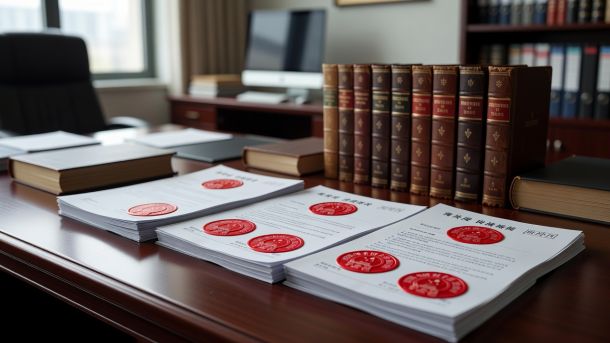
The copyright registration process involves submitting the work sample, a description of the work, and proof of authorship or ownership to the local copyright registration office. Processing typically takes 30-45 working days. The registration certificate serves as prima facie evidence of ownership in infringement proceedings.
Copyright owners in China can pursue enforcement through administrative complaints to the local copyright bureau, civil litigation seeking damages and injunctive relief, and criminal prosecution for large-scale infringement. Chinese courts have been increasing statutory damage awards in copyright cases, with maximum statutory damages reaching RMB 5 million for willful infringement.
Enforcement Strategies and Remedies
Copyright enforcement in China has evolved significantly, with specialized IP courts in Beijing, Shanghai, Guangzhou, and three dedicated internet courts providing efficient adjudication. Administrative enforcement through local copyright bureaus offers a faster and lower-cost alternative to litigation for clear cases of infringement.
Before initiating enforcement, rights holders should secure comprehensive evidence of infringement. This typically involves notarized evidence collection — purchasing infringing products or accessing infringing online content in the presence of a notary. For online infringement, web page screenshots and domain registration information should be preserved through notarization or blockchain-based timestamp services.
Available remedies include: injunctive relief to stop ongoing infringement, damages calculated based on actual losses or infringer's profits, statutory damages of up to RMB 5 million for willful infringement, destruction of infringing copies and equipment, and public apology or correction statements.
Criminal enforcement is available for copyright infringement exceeding certain thresholds (typically 500 copies or RMB 30,000 in illegal business volume). Criminal prosecution can result in imprisonment of up to seven years for serious offenses, providing a powerful deterrent against commercial-scale infringement.
For personalized legal guidance tailored to your specific situation, consultation with an experienced attorney familiar with both Chinese law and international business practices is strongly recommended. Each case presents unique circumstances that may affect the applicable legal analysis, and the information provided in this article should not be relied upon as a substitute for professional legal advice. A qualified lawyer can assess your particular needs, identify potential issues specific to your industry and transaction structure, and develop strategies to address them effectively within the framework of Chinese law.
Copyright Licensing and Monetization Strategies
Beyond enforcement, copyright owners should develop proactive strategies for monetizing their works in the Chinese market. Licensing arrangements should be carefully structured to address territory scope (worldwide or China-only), duration, exclusivity, sublicensing rights, quality control provisions, and termination rights. Royalty rates and payment terms should reflect market conditions and be documented in written agreements in both Chinese and English.
Copyright licensing in China requires attention to several legal formalities. Exclusive licenses should be registered with the copyright office to be effective against third parties. Non-exclusive licenses may be oral but written documentation is strongly recommended for evidentiary purposes. Collective management organizations, such as the Music Copyright Society of China, administer certain categories of rights and can facilitate licensing for broad repertoires.
The digital environment presents both opportunities and challenges for copyright owners. Online platforms hosting user-generated content are increasingly subject to take-down obligations under Chinese law, though the notice-and-takedown process can be slower than in some other jurisdictions. Content identification technologies and automated enforcement tools can help copyright owners identify and address online infringement at scale.
Recent developments in Chinese copyright law include enhanced protection for sports broadcast content, expanded coverage of copyright-related rights, and increased criminal penalties for large-scale infringement. Copyright owners should stay informed of legal developments and adjust their protection strategies accordingly.
International Copyright Framework and China's Obligations
China's membership in the Berne Convention for the Protection of Literary and Artistic Works ensures that works first published in any Berne Union country receive automatic copyright protection in China without the need for registration or other formalities. This national treatment principle means that foreign copyright owners enjoy the same rights and remedies as Chinese citizens in Chinese courts and administrative proceedings.
China's accession to the World Trade Organization and implementation of the TRIPS Agreement further strengthened copyright protection by establishing minimum standards for enforcement procedures, remedies, and border measures. The Agreement on Trade-Related Aspects of Intellectual Property Rights requires member countries to provide effective enforcement mechanisms, including provisional measures, injunctions, damages, and criminal penalties for willful infringement.
The WIPO Copyright Treaty and WIPO Performances and Phonograms Treaty, to which China is a party, extend copyright protection to digital works and establish obligations for the protection of technological protection measures and rights management information. These treaties are particularly relevant for copyright owners whose works are distributed or exploited through digital channels in the Chinese market.
Bilateral intellectual property dialogues between China and major trading partners, including the United States and the European Union, provide additional channels for addressing systemic copyright enforcement issues. These dialogues have resulted in improved enforcement cooperation, enhanced border measures, and increased criminal prosecution of commercial-scale copyright infringement in China.
Copyright owners should develop a China-specific enforcement strategy that accounts for the unique characteristics of the Chinese legal environment. This strategy should include regular monitoring of Chinese e-commerce platforms, social media, and content sharing sites for unauthorized use of protected works; establishment of relationships with local law firms experienced in IP enforcement; development of a graduated enforcement response ranging from takedown notices to litigation; and budget allocation for enforcement costs including notary fees, court costs, and legal fees.
Alternative dispute resolution methods for copyright disputes in China include mediation through the Copyright Mediation Center, arbitration where the parties have agreed to arbitration, and administrative adjudication through the National Copyright Administration. These alternatives may offer faster resolution and lower costs than litigation, particularly for disputes involving straightforward factual issues.
Copyright collective management organizations in China administer rights on behalf of their members in specific categories. The Music Copyright Society of China administers musical works, the China Audio-Video Copyright Association administers audiovisual works, and the China Written Works Copyright Society administers written works. Foreign copyright owners can authorize these organizations to license their works and collect royalties in China through reciprocal agreements with corresponding organizations in their home countries.
For personalized legal guidance tailored to your specific situation, it is strongly recommended to consult with a qualified attorney who specializes in the relevant area of Chinese law. The legal landscape in China continues to evolve rapidly, and professional advice ensures that your rights and interests are fully protected under applicable laws and regulations. An experienced lawyer can assess your particular circumstances, identify potential legal issues, and develop strategies to address them effectively within the Chinese legal framework.

Feel free to send us an email or drop a call for free consultation.