 Ask A Lawyer
 Contact Us
Registering a Foreign-Invested Enterprise in China: A Comprehensive Guide for Foreign Companies
Understanding Foreign-Invested Enterprise Registration in China
Foreign companies and individuals looking to establish a presence in China must navigate a complex regulatory landscape. Unlike registering a domestic company, foreign-invested enterprise (FIE) registration involves additional requirements, more extensive documentation, and compliance with specific Chinese laws governing foreign investment.
Key Requirements for FIE Registration
The conditions for registering a foreign-invested company in China are considerably more stringent than those for domestic enterprises. The main requirements encompass shareholder qualifications, board structure, company name approval, business scope definition, registered capital, registered address, articles of association, and legal representative appointment.
Shareholder Qualifications
For a wholly foreign-owned enterprise (WFOE), the shareholder can be either a foreign company or a foreign individual. In the case of a Sino-foreign equity joint venture, the Chinese party must be a Chinese company rather than an individual Chinese resident. Foreign companies must submit notarized certificates of legal existence, while foreign individuals must provide notarized passports.
Board Structure and Management
An FIE may establish either a board of directors or, if no board is formed, appoint an executive director. The legal representative may be either a Chinese or foreign national. This flexibility allows foreign investors to structure management according to their operational needs.
Registered Capital Requirements
Under China's Company Law, the minimum registered capital for a standard foreign-invested company is RMB 100,000. Capital contributions may be made in installments, with the first payment of at least 20% due within the initial period, and the remainder within two years. Foreign investors must inject capital into a designated foreign exchange account and engage a certified accounting firm to issue a capital verification report.
Required Documentation for FIE Registration
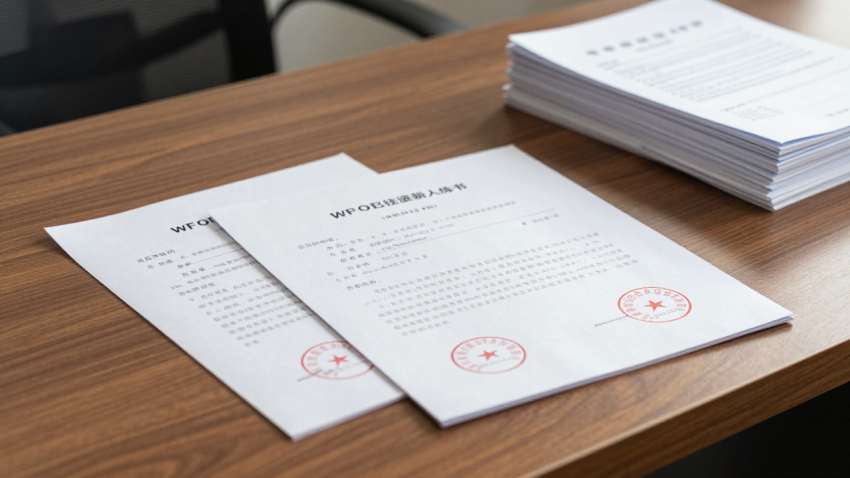
The documentation required for FIE registration is extensive and includes:
- ⚖️ Power of attorney and authorization documents
- 📜 Foreign-invested enterprise establishment registration application (original, two copies)
- 📋 Project application report signed by the legal representative or authorized agent
- 🏢 Company articles of association signed by the investor's legal representative or authorized agent
- 👥 Board member list and appointment documents
- 🆔 Valid passports or ID documents for the legal representative and board members
- ✅ Investor's certificate of legal existence with notarization
- 💰 Bank reference letter from the investor's bank
- 🌿 Environmental protection department approval
- 🏭 Site certificate or lease agreement with the landlord's title deed and business license
Important Considerations for Foreign Investors
Several practical considerations deserve attention when establishing an FIE in China. First, the business scope must be clearly defined and approved by authorities. Second, the articles of association must comply with Chinese corporate law standards. Third, pre-establishment environmental impact assessments may be required depending on the industry.
China's Foreign Investment Law, effective since 2020, has significantly streamlined the FIE registration process by replacing the previous approval system with a filing-based approach for most industries. However, certain restricted sectors still require government approval.
The Registration Process Step by Step
| Step | Description | Typical Timeline |
|---|---|---|
| 1 | Name pre-approval with market supervision authority | 1-3 days |
| 2 | Submit establishment application with all required documents | 5-10 days |
| 3 | Obtain business license | 3-5 days |
| 4 | Company seal carving and filing | 1-2 days |
| 5 | Foreign exchange registration | 3-5 days |
| 6 | Tax registration and invoice procurement | 5-7 days |
| 7 | Capital injection and verification report | 30-90 days |
Common Pitfalls to Avoid
Foreign investors frequently encounter challenges during the FIE registration process. These include underestimating the time required for document notarization and authentication, failing to properly define the business scope, and not adequately preparing for post-registration compliance obligations such as foreign exchange reporting and annual inspections.
Engaging experienced local legal counsel who understands both Chinese regulatory requirements and the foreign investor's commercial objectives can significantly reduce the risk of delays and compliance issues.
How a Shanxi-Based Foreign Investment Lawyer Can Help
A lawyer based in Taiyuan, Shanxi Province, with expertise in foreign investment law, can assist foreign clients throughout the entire FIE establishment process. From conducting preliminary feasibility assessments and preparing the required documentation to liaising with local authorities and ensuring ongoing compliance, legal guidance tailored to the specific regulatory environment of Shanxi Province is invaluable for foreign investors entering this market.
Practical Steps for Foreign Investors Entering Shanxi
Shanxi Province offers specific incentives for foreign investors, particularly in manufacturing, technology, and energy sectors. Foreign companies considering establishing operations in Taiyuan or other Shanxi cities should conduct thorough market research and engage local legal counsel early in the process. Key considerations include selecting the appropriate corporate structure (WFOE vs. joint venture), understanding local tax incentives, navigating industry-specific licensing requirements, and preparing for post-establishment compliance obligations such as annual reporting and foreign exchange controls. A well-structured market entry strategy significantly reduces the risk of regulatory complications.
Post-Registration Compliance Obligations
After successfully registering an FIE in China, foreign investors face ongoing compliance requirements. These include monthly tax filings, quarterly financial reporting to the market supervision authority, annual foreign investment information reporting, foreign exchange monitoring and reporting, and labor contract management for Chinese employees. Non-compliance with these obligations can result in fines, administrative penalties, and in serious cases, revocation of the business license. Maintaining a qualified internal compliance team or engaging external legal counsel familiar with both Chinese regulations and the specific needs of foreign-invested enterprises is strongly recommended for long-term operational success.
Strategic Considerations for FIE Location Selection
Choosing the right location within China for a foreign-invested enterprise significantly impacts operational success. Taiyuan, the capital of Shanxi Province, offers distinct advantages for specific industries including coal technology transformation, new energy, and advanced manufacturing. The Shanxi Comprehensive Reform Demonstration Zone provides preferential tax policies and streamlined administrative procedures for qualifying foreign-invested enterprises. Foreign investors should evaluate local government incentives, availability of skilled labor, supply chain concentration, infrastructure quality, and proximity to target markets when selecting the optimal location for their China operations.
Capital Contribution and Financing Options
Foreign investors have several options for financing their China operations beyond the initial registered capital contribution. These include capital increase through additional foreign currency injection, domestic renminbi loans from Chinese banks (subject to foreign exchange regulations), shareholder loans structured as foreign debt (requiring SAFE registration), and reinvestment of profits generated by the Chinese entity. Each financing method has distinct regulatory requirements, tax implications, and foreign exchange control considerations that should be carefully evaluated with professional advisors before implementation.
Long-Term Compliance and Strategic Considerations
Foreign-invested enterprises operating in Shanxi must maintain ongoing compliance with evolving regulations. The Foreign Investment Law requires annual reporting of basic information. Changes in registered capital, business scope, or shareholders must be promptly amended with authorities. Foreign exchange controls require careful management of cross-border fund movements, including profit repatriation subject to tax clearance and verification. Understanding the regulatory environment helps investors maintain good standing.
Key Takeaways for Foreign Investors Setting Up in Shanxi Province
Foreign investors establishing operations in Shanxi should approach the market entry process methodically. The province offers distinct advantages for companies in the energy transformation, manufacturing, and technology sectors. Key success factors include selecting the appropriate corporate structure early, preparing comprehensive documentation in compliance with local requirements, engaging experienced Chinese legal counsel familiar with both national regulations and Shanxi-specific implementation practices, and maintaining ongoing compliance with the full range of post-establishment obligations. The Foreign Investment Law has created a more transparent and predictable environment for foreign investors, but the regulatory landscape continues to evolve. Staying informed about regulatory changes, maintaining good relationships with local authorities, and investing in compliance infrastructure are essential strategies for long-term success in the Shanxi market. Foreign investors who approach the process with careful planning, professional guidance, and a commitment to regulatory compliance will find that establishing and operating a foreign-invested enterprise in Shanxi Province can be a rewarding and profitable endeavor.

Feel free to send us an email or drop a call for free consultation.