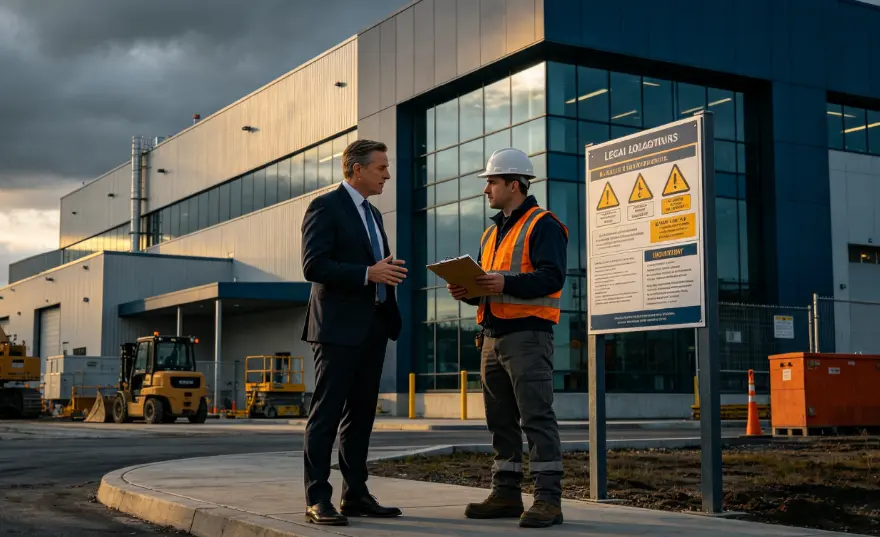
Commercial leasing in China presents unique legal considerations that differ substantially from Western jurisdictions. Foreign businesses entering the Chinese market must understand the land tenure system, lease registration requirements, and common contractual pitfalls when leasing office, retail, or industrial premises for their operations in China.
The Land Use Rights System
Foreign businesses must understand that all land in China is owned by the state or by collectives. Companies do not own land outright but hold land use rights for fixed periods determined by the land's designated purpose. Commercial properties carry 40-year land use terms, industrial properties 50 years, and residential properties 70 years. When leasing commercial space, the tenant must verify that the landlord holds valid land use rights and building ownership certificates. Leases granted by parties without proper title documentation may be ruled unenforceable by Chinese courts. The landlord should provide copies of the State-Owned Land Use Certificate and the Building Ownership Certificate during due diligence before the lease is signed.
Tenants should verify that the property's registered use classification matches their intended business activities, as operating in premises classified for a different use can result in administrative penalties and license revocation. Tenants should also check with local planning authorities about any known urban renewal projects that could affect the leased property. Properties in areas designated for redevelopment may have limited lease terms or may require the tenant to vacate before the lease expires if demolition orders are issued. These risks should be addressed in the lease agreement through appropriate compensation clauses for early termination due to government expropriation or urban renewal.
Essential Lease Terms and Negotiation Points
Commercial leases in China typically run for three to five years, though longer terms are available for larger spaces or specialized properties. The lease contract must clearly specify the exact premises being leased, including the building area in square meters, floor plan, and any shared or common areas. The permitted use clause must align with the tenant's business license scope and the property's designated use classification. Rent is typically quoted per square meter per day, and the lease should specify whether this includes property management fees, utilities, and taxes. Most commercial leases require a security deposit of two to three months' rent.

- Deposit, repair/restoration, and early termination must be in the lease and match title/use.
- Commercial Leasing in China — legal tests.
- Commercial Leasing in China.
- FAILURE MODES
- Use and title
The lease should address renewal rights, often giving the tenant a right of first refusal or an option to renew. Early termination provisions should specify the notice period, any penalty, and the circumstances for termination without penalty. Force majeure clauses are standard and should be carefully reviewed for scope, particularly since the COVID-19 pandemic led to significant judicial interpretation of force majeure in lease contexts, with some courts allowing rent reductions under specific circumstances. Foreign tenants should also negotiate for the right to make minor interior alterations without separate landlord approval, as this can significantly simplify office fit-out procedures.
Registration and Government Approvals
All commercial leases in China must be registered with the local housing authority to be enforceable against third parties. The registration process requires both landlord and tenant to submit the lease contract, their business licenses or identification documents, and the landlord's property certificates. Registration is also required for the tenant to obtain or update their business license for the leased address. Failure to register the lease can result in fines of up to 5,000 yuan under the Measures for the Administration of Commercial Housing Leasing. Unregistered leases may not be enforceable against third parties who subsequently acquire rights to the property.
Subleasing is generally prohibited without the landlord's written consent, and unauthorized subleases may be declared void by the courts. Renovations to the leased premises require the landlord's approval and may need additional permits from local construction authorities. Foreign tenants undertaking significant renovations should engage a local project manager familiar with Chinese building codes and permit procedures to avoid delays and compliance issues. The lease should specify which party bears the cost of renovations and whether improvements become the landlord's property at the end of the lease term, a point that is often disputed at lease expiration.
Dispute Resolution and Language Considerations
Commercial lease disputes can be resolved through negotiation, mediation, arbitration, or litigation. Most commercial leases specify arbitration as the preferred method, with the China International Economic and Trade Arbitration Commission being a common choice for foreign-related disputes. Arbitration is generally faster than litigation and proceedings are confidential. If litigation is chosen, the case will be heard in the People's Court at the location where the property is situated. Foreign businesses should ensure the lease is drafted in both Chinese and English, with a clear provision specifying which language prevails in the event of discrepancy.
Standard-form leases commonly used by Chinese landlords may contain provisions unfavorable to tenants that would not be customary in Western jurisdictions. For example, many standard leases grant the landlord broad rights to enter the premises, make changes to the building common areas, or relocate the tenant to a different unit within the same building. These provisions should be carefully reviewed and negotiated. Independent legal review by a Chinese lawyer with commercial property experience is essential before signing any lease agreement, as even well-negotiated commercial terms can be undermined by unfavorable standard provisions in the fine print.
Real Property Application Notes
I align forum and pleading choices with what can actually be enforced: assets, licenses, cash flows, and available interim measures under PRC procedure.
I document scope, assumptions, and decision rights at engagement start so foreign clients know what will be filed, who must approve, and when silence becomes a missed deadline.
- Kickoff scope memo and remedy ladder
- Bilingual document control
- Deadline and limitation tracking
- Enforcement and settlement options in parallel
Operational Checklist for Foreign Readers
I document scope, assumptions, and decision rights at engagement start so foreign clients know what will be filed, who must approve, and when silence becomes a missed deadline.

- Do title, use, deposit, and exit terms match the signed lease?.
- Commercial Leasing in China — sequence.
- Commercial Leasing in China — process. Commercial Leasing in China — sequence; Check title and use; Draft deposit and return; Registration and Government; Approvals; Set break and default.
- Commercial Leasing in China — process.
I treat bilingual consistency as a risk control: chops, authority documents, and English summaries must tell the same commercial story.
- Documented objectives and preferred remedies
- Bilingual document control
- Deadline and limitation tracking
- Enforcement and settlement options in parallel
Risk Controls Before Escalation
I treat bilingual consistency as a risk control: chops, authority documents, and English summaries must tell the same commercial story.
I prefer early written notices and clean evidence indexes over informal WeChat-only chains when the amount or regulatory exposure is material.
- Mandate letter covering scope and outcomes
- Bilingual document control
- Deadline and limitation tracking
- Enforcement and settlement options in parallel