
 Ask A Lawyer
 Contact Us
New 2026 Construction Rules in China: When Unlicensed Contractors Can Sue Construction Companies Directly
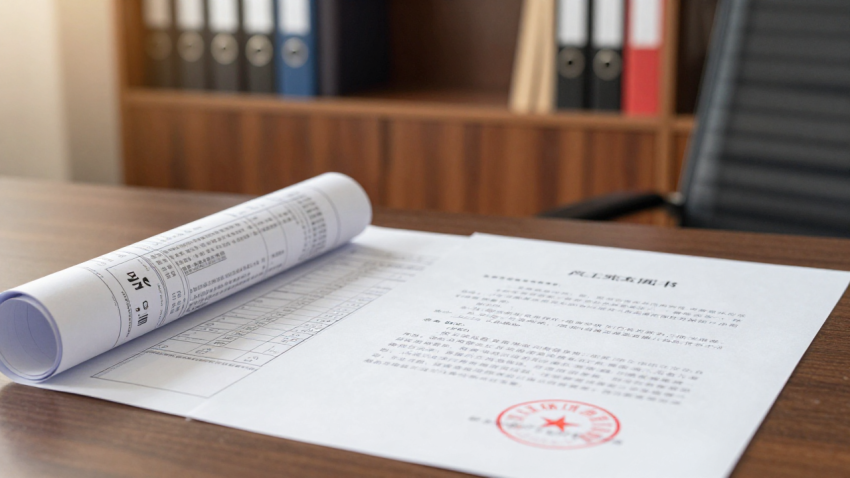
Foreign companies involved in construction projects in China have long relied on a network of local subcontractors, many of whom operate as unlicensed contractors known as baogongtou. A significant new judicial interpretation issued in 2026 by the Supreme People's Court of China fundamentally alters the balance of power in construction payment disputes. For the first time, unlicensed contractors who perform actual construction work may bring direct legal actions against the construction companies that engaged them, provided they meet one of three clearly defined conditions. This article examines these new rules and their practical implications for foreign construction companies operating in China.
Background: The Baogongtou and the Payment Problem
In China's construction industry, the baogongtou system is a deeply embedded practice in which individual workers or small teams undertake construction work without holding the formal construction qualifications required by law. These unlicensed contractors typically execute the actual physical work on construction sites while a licensed construction company serves as the formal contractor of record. Despite the absence of a legally valid contract between the unlicensed contractor and the construction company, the baogongtou has historically shouldered the real financial burden of wages, materials, and equipment.
Under prior law, unlicensed contractors faced a fundamental legal dilemma: because they lacked the required qualifications, their contractual arrangements were void ab initio under Article 153 of the PRC Civil Code and Article 1 of the Interpretation on Construction Project Contract Disputes. This created a perverse incentive for unscrupulous construction companies to withhold payment, knowing that the unlicensed contractor had limited legal recourse. The 2026 judicial interpretation directly addresses this inequity.
Condition One: The Construction Company Received Payment but Maliciously Withholds It
The first and most common scenario arises when the project owner or developer has already paid the construction company for the work performed, yet the construction company deliberately refuses to pass that payment down to the unlicensed contractor who actually performed the labor.
Under the 2026 interpretation, if the unlicensed contractor can establish that the construction company received corresponding payment from the project owner and has no legitimate contractual basis for withholding the subcontractor's share, the court will permit the unlicensed contractor to sue the construction company directly for the amount due. The key evidentiary burden on the unlicensed contractor is to demonstrate the upstream payment. This may be accomplished through bank records, payment receipts, the construction company's own accounting entries, or discovery obtained during litigation.
Foreign project owners or general contractors should be aware that the existence of this remedy means that disputes between the licensed contractor and the unlicensed subcontractor may now more readily escalate into formal litigation, potentially disrupting project timelines. Maintaining transparent payment chains and requiring the licensed contractor to provide proof of payment to downstream workers is now a prudent risk management practice.
Condition Two: The Construction Company Refuses to Cooperate with Debt Collection
The second condition addresses the scenario in which the construction company actively obstructs the unlicensed contractor's efforts to recover payment from the project owner. This may take several forms: refusing to confirm the quantity or quality of work performed, failing to issue necessary documentation for the unlicensed contractor to approach the project owner directly, or otherwise creating procedural barriers to payment.
The 2026 interpretation provides that where the construction company's refusal to cooperate materially impedes the unlicensed contractor's ability to collect the debt, the unlicensed contractor may bypass the construction company and sue it directly for the unpaid amount. This condition is particularly significant for foreign companies acting as project owners, because it creates a judicial pathway through which an unlicensed contractor may obtain court orders that effectively freeze project funds or attach the construction company's receivables.
Foreign construction companies should ensure that their contracts with licensed contractors include explicit obligations to cooperate with downstream payment verification, and that these obligations are documented and enforceable.
Condition Three: The Construction Company's Debts Freeze the Subcontractor's Payment
The third condition captures situations where the construction company's own financial distress creates a legal bottleneck. When a construction company has its bank accounts frozen due to enforcement actions by its own creditors, or when its assets are seized in connection with unrelated debts, the payments intended for the unlicensed subcontractor become trapped in the company's frozen accounts.
The 2026 interpretation provides that in such circumstances, the unlicensed contractor may assert a priority claim against the frozen funds to the extent of the value of the work actually performed. This represents a significant expansion of the rights of unlicensed workers in Chinese insolvency and debt enforcement proceedings. The practical effect is that the unlicensed contractor's claim for payment takes priority over the claims of the construction company's general unsecured creditors with respect to the specific project funds.
For foreign companies that engage licensed construction contractors in China, this condition underscores the importance of conducting basic due diligence on the contractor's financial health before entering into a construction agreement. A contractor facing its own creditor pressures may expose the foreign project owner to direct litigation from unlicensed subcontractors.
Practical Implications for Foreign Construction Companies
The 2026 judicial interpretation represents a meaningful shift in Chinese construction law that foreign companies cannot afford to ignore. The new rules effectively create a statutory mechanism through which unlicensed contractors can enforce payment claims directly, regardless of the invalidity of their underlying contractual arrangements.
Foreign project owners and general contractors should take three proactive measures. First, include robust payment verification clauses in all construction contracts requiring the licensed contractor to provide periodic proof that downstream workers have been paid. Second, maintain independent records of all payments made to the licensed contractor, including bank statements and signed receipts, to mitigate the risk of litigation should a dispute arise. Third, conduct financial due diligence on the licensed contractor's solvency before project commencement to avoid the third condition scenario.
As Chinese construction law continues to evolve toward greater protection of actual laborers, the era in which unlicensed contractors could be simply ignored after completing their work has come to a decisive end. Foreign companies that adapt their contracting practices accordingly will be best positioned to avoid costly and disruptive litigation.

Feel free to send us an email or drop a call for free consultation.