 Ask A Lawyer
 Contact Us
Trademark Protection for Foreign Brands in China: Registration, Infringement, and Enforcement

Understanding Trademark Infringement Damages Under Chinese Law
Trademark protection in China operates under the Trademark Law of the People's Republic of China, which provides a comprehensive framework for trademark registration, protection, and enforcement. For foreign brand owners, understanding the damages available for trademark infringement is essential for developing an effective enforcement strategy. Article 63 of the Trademark Law establishes a three-tier system for calculating infringement damages, designed to compensate rights holders adequately while deterring infringing behavior.
The Three Methods of Damage Calculation
The Trademark Law provides three methods for calculating infringement damages, applied in order of priority. The first and preferred method calculates damages based on the actual losses suffered by the trademark holder as a result of the infringement. This includes lost profits from sales that the rights holder would have made but for the infringement, as well as any price erosion or reputational harm. When actual losses are difficult to prove, the second method calculates damages based on the profits earned by the infringer from the infringing activities. This requires the rights holder to present evidence of the infringer's sales volume and profit margin, which may be obtained through court-ordered disclosure of the infringer's financial records.
"Article 63 of the Trademark Law provides that where the actual losses of the rights holder or the profits gained by the infringer cannot be determined, the people's court may award statutory damages of up to RMB 3 million based on the circumstances of the infringement. For willful infringement with serious circumstances, punitive damages of up to three times the calculated amount may be awarded."
Statutory Damages and Punitive Damages
When neither the rights holder's actual losses nor the infringer's profits can be reasonably determined, the court may award statutory damages of up to RMB 3 million, based on factors including the nature and duration of the infringement, the scale of infringing activities, the infringer's intent, and the harm caused to the trademark's reputation. For cases involving willful infringement with serious circumstances, the court may award punitive damages of between one and three times the amount calculated under the first two methods. This punitive damages provision, added by the 2019 amendment to the Trademark Law, significantly strengthened the deterrent effect of trademark enforcement in China.
Evidence Collection for Infringement Cases
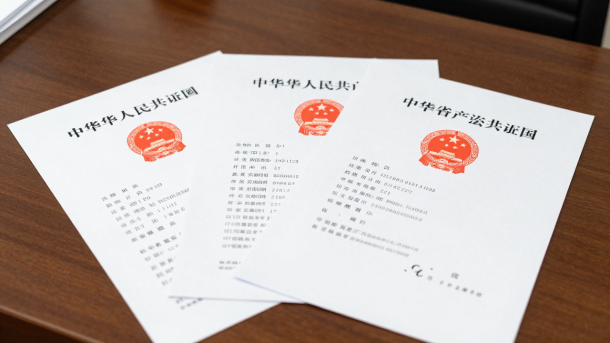
Successful trademark enforcement requires thorough evidence collection. Essential evidence includes the rights holder's prior rights certificates, including the trademark registration certificate, patent certificates, copyright registration certificates, and evidence of the mark's reputation and recognition in China. Evidence of infringing activities should include samples of infringing products or packaging, purchase receipts clearly showing the infringer's name, transaction date, and price, and photographs or video evidence of the infringing premises or sales locations. The rights holder should also gather evidence of damages, including sales records showing lost revenue, marketing and advertising expenditures, and the costs incurred in pursuing enforcement actions.
📋 Practical steps for foreign brand owners protecting trademarks in China:
- ⚖️ Register trademarks with CNIPA before entering the Chinese market, including defensive registrations in related classes
- 📜 Monitor new trademark applications through professional watching services to detect conflicting marks during the opposition period
- 🔍 Conduct regular market investigations to identify infringing products and unauthorized use
- 🏛️ Work with experienced local counsel to develop an enforcement strategy appropriate for the type and scale of infringement
- 💰 Consider administrative enforcement through local Administration for Market Regulation as a cost-effective first step
For professional assistance with trademark registration, enforcement, and dispute resolution in China, consulting with qualified intellectual property counsel is recommended to navigate the complexities of the Chinese trademark system effectively.
Administrative Enforcement Options
Administrative enforcement through local Administration for Market Regulation offices is often the most cost-effective first step for trademark owners. The AMR may conduct investigations, raid infringing premises, seize counterfeit goods and manufacturing equipment, and impose administrative penalties including fines and destruction of infringing goods. Administrative enforcement is generally faster and less expensive than civil litigation, making it particularly suitable for clear-cut infringement cases where the infringer operates openly. However, administrative enforcement does not provide monetary compensation to the rights holder, and civil litigation may be necessary to recover damages in addition to stopping the infringement.
Customs Protection for Trademark Rights
Trademark owners may record their rights with Chinese Customs to obtain border protection against counterfeit goods. Once a trademark is recorded, customs authorities may detain shipments suspected of containing infringing goods and notify the rights holder to confirm whether the goods are genuine. Customs protection is particularly valuable for brand owners whose goods are subject to counterfeiting and export from China to other markets. The customs recordal system requires registration with the General Administration of Customs and is valid for ten years, renewable concurrently with the trademark registration.
The China National Intellectual Property Administration CNIPA has significantly improved trademark examination efficiency and quality in recent years. The current examination timeline for standard trademark applications is approximately four to six months from filing to publication, followed by a three-month opposition period. If no opposition is filed or if an opposition is successfully overcome, registration is granted and a certificate is issued. Foreign applicants may file trademark applications directly through CNIPA or through the Madrid System designating China, which provides a streamlined process for applicants who already hold a home country registration or application. Madrid System filings benefit from the priority date of the home application, which can be critical in a first-to-file system where timing determines priority.
Renewal of trademark registrations in China is required every ten years and may be applied for within the twelve months before expiry or within the six-month grace period after expiry. Failure to renew results in cancellation of the registration, leaving the mark vulnerable to appropriation by third parties. Foreign brand owners should implement systematic trademark portfolio management including calendar reminders for renewal deadlines and periodic reviews of the portfolio to ensure adequate coverage of current and anticipated business activities.
Brand owners should also consider the strategic use of well-known trademark recognition, which provides enhanced protection beyond ordinary trademark registration. Well-known marks are protected across all classes of goods and services, even if the mark is not registered in those classes, and are protected against dilution and other forms of harm that would not be actionable for ordinary marks. Well-known trademark recognition may be obtained through CNIPA in opposition or invalidation proceedings or through court findings in infringement litigation. Building the evidentiary record to support a well-known mark claim requires comprehensive evidence of the marks reputation, including sales volumes, advertising expenditures, market share, and recognition in relevant trade and consumer circles.
The administrative enforcement system provides a relatively efficient mechanism for addressing trademark infringement, particularly for counterfeit goods sold through physical retail channels. Rights holders may file complaints with the local Administration for Market Regulation, which has the authority to conduct searches, seize evidence, and impose penalties without full civil litigation. A coordinated approach combining administrative enforcement with online platform takedowns and customs seizure provides the most comprehensive protection for brand owners in China.
Trademark owners should also consider the strategic importance of filing their trademarks in Chinese characters, as Chinese consumers identify brands through their Chinese names. A well-chosen Chinese brand name that is phonetically and semantically appealing to Chinese consumers can significantly enhance brand recognition and market penetration. The Chinese trademark registration system encourages applicants to register both their original foreign-language mark and its Chinese transliteration or translation, as these are treated as separate marks requiring separate registrations. Failure to register the Chinese version of a foreign brand name creates a vulnerability that bad-faith filers may exploit by registering the Chinese name themselves and then demanding payment from the brand owner or selling counterfeit products under the Chinese name, confusing consumers and diluting the brand value.
Domain name disputes involving Chinese trademarks present another enforcement challenge for foreign brand owners. China country-code top-level domain .cn and Chinese-language domain names are increasingly important for e-commerce and digital marketing in China. Brand owners should register their trademarks as domain names before third parties register them, and they should monitor the domain name registration database for potentially infringing registrations. The domain name dispute resolution procedure administered by the China Internet Network Information Center CNNIC and the Asian Domain Name Dispute Resolution Centre ADNDRC provides a mechanism for challenging bad-faith domain name registrations that are identical or confusingly similar to the trademark holders registered mark.

Feel free to send us an email or drop a call for free consultation.