 Ask A Lawyer
 Contact Us
Import and Export Compliance in China: Essential Guide for International Traders
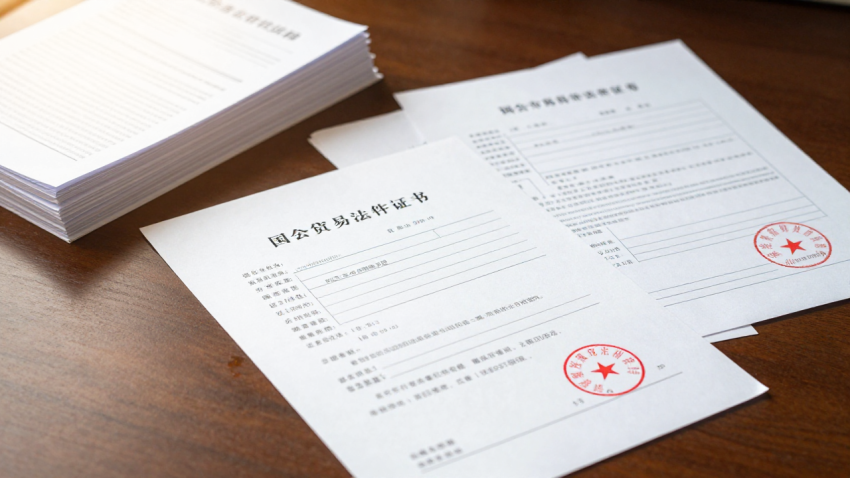
Import and Export Compliance in China: A Guide for Foreign Trade Companies
China's import and export regulatory system requires careful navigation by foreign companies engaged in cross-border trade. Understanding customs procedures, licensing requirements, and compliance obligations is essential for avoiding delays, penalties, and legal liability.
Import Licensing Requirements
Certain goods imported into China require specific licenses or permits. The scope of goods subject to licensing includes controlled chemicals, waste materials, certain agricultural products, and strategic commodities. The licensing process involves application to the relevant ministry, documentation review, and issuance of an import license with specific validity periods and quantity limits.
Customs Declaration and Clearance
All imports and exports must go through customs declaration. The customs clearance process involves submitting documentation including commercial invoices, packing lists, bills of lading, contracts, and any required licenses or certificates. Customs authorities review the declaration, inspect goods when necessary, assess applicable duties and taxes, and release the goods upon compliance.
Tariff Classification and Valuation
Correct tariff classification under the HS (Harmonized System) code system is critical for determining applicable duty rates. China applies both Most-Favored-Nation (MFN) rates for WTO members and conventional rates for countries with bilateral agreements. Customs valuation follows the transaction value method as the primary basis, with alternative methods applied when the transaction value cannot be determined.
Key Compliance Risks
Common compliance risks in China's import/export regime include misclassification leading to incorrect duty payment, undervaluation triggering customs audits, failure to obtain required licenses, and violations of restricted or prohibited goods regulations. Penalties range from fines and seizure of goods to suspension of import/export rights and criminal prosecution for serious violations.
Special Customs Procedures and Trade Facilitation
China offers several special customs procedures that can benefit importers and exporters. Bonded warehouse arrangements allow goods to be stored in designated areas without payment of duties until they are released for domestic consumption. Processing trade regimes permit duty-free import of raw materials and components for manufacturing and re-export. Free trade zones offer streamlined customs clearance, deferred duty payment, and reduced documentation requirements. The Authorized Economic Operator (AEO) program provides expedited customs clearance benefits for certified companies with strong compliance records. Foreign trade companies should evaluate whether these special procedures are available and advantageous for their specific business models and supply chain configurations.
Trade Dispute Resolution Mechanisms
Trade disputes between Chinese and foreign companies may arise from various issues including contract performance, quality disputes, delivery delays, and payment defaults. China has established a comprehensive framework for trade dispute resolution through the China International Economic and Trade Arbitration Commission (CIETAC) and the China Maritime Arbitration Commission (CMAC). Many international arbitration institutions including the ICC, SIAC, and HKIAC also administer arbitrations seated in China. Mediation is increasingly encouraged as a first step in trade dispute resolution, with the China Council for the Promotion of International Trade (CCPIT) offering mediation services. Well-drafted contracts with clear dispute resolution clauses are the foundation of effective trade dispute management.
Import Tariff Classification and Duty Optimization
Correct tariff classification under the China HS Tariff Schedule determines duty rates and import restrictions. China applies WTO Customs Valuation principles using transaction value. Advance rulings are available for certainty. Professional advisory services help importers optimize duty costs while maintaining compliance with complex tariff classification and valuation rules.
Trade Compliance Best Practices for Importers and Exporters
Companies engaged in international trade with China should implement robust trade compliance programs addressing customs classification and valuation, licensing and permit requirements, restricted and prohibited goods screening, sanctions and export controls compliance, recordkeeping and documentation, and periodic internal audits. China customs authorities have modernized their enforcement capabilities through digitization and data analytics, increasing the likelihood of detecting non-compliance through automated systems. Penalties for customs violations range from fines and seizure of goods to suspension of import-export rights and criminal prosecution in serious cases. Companies that invest in trade compliance infrastructure including trained personnel, automated classification tools, and documented procedures are better positioned to navigate China complex customs regime efficiently while minimizing compliance risk. Professional customs advisory services can provide valuable support for companies with limited in-house trade compliance expertise, particularly those dealing with complex products, multiple sourcing countries, or evolving regulatory requirements.
Customs Valuation Methods and Transfer Pricing Considerations
Import valuation for customs purposes follows the transaction value method as the primary approach, using the price actually paid or payable for the imported goods. Customs authorities may adjust the declared value if there are reasons to doubt its accuracy, including related-party transactions where the relationship may have influenced the price. Companies importing goods from related parties should maintain transfer pricing documentation demonstrating that the transaction value reflects the arm length principle, consistent with both customs valuation rules and tax transfer pricing requirements. Alternative valuation methods applied when transaction value cannot be used include the transaction value of identical goods, transaction value of similar goods, deductive value method, computed value method, and fallback method based on reasonable means consistent with WTO principles. Proactive engagement with customs authorities through advance valuation rulings can provide certainty for high-value or complex import transactions and reduce the risk of post-importation adjustments and penalties.
Managing Customs Audits and Disputes
China Customs conducts routine and targeted audits to verify compliance with import and export regulations. Audits may focus on tariff classification accuracy, valuation correctness, origin determination, duty preference eligibility, and compliance with licensing requirements. Companies selected for audit should cooperate fully with customs authorities while protecting their legal rights through appropriate representation. Maintaining comprehensive import and export records including commercial invoices, customs declarations, certificates of origin, and duty payment receipts is essential for demonstrating compliance during audits. When disputes arise with customs authorities regarding classification, valuation, or other matters, companies may pursue administrative reconsideration within the customs administration or judicial review in the people court. The administrative reconsideration process is generally faster and less formal than court proceedings and may be more suitable for technical disputes while court review may be appropriate for significant legal questions or disputes involving substantial financial exposure. Professional customs advisory support is strongly recommended for companies facing complex audits or significant disputes with customs authorities.
Trade Remedies and Protective Measures
China applies trade remedy measures including anti-dumping duties, countervailing duties, and safeguard measures to protect domestic industries from unfair trade practices and import surges. Foreign exporters to China may be subject to anti-dumping investigations initiated by the Ministry of Commerce based on petitions from domestic industries claiming that imported products are sold at below-normal value and causing material injury. Companies subject to anti-dumping investigations must respond to questionnaires, cooperate with on-site verification visits, and may request individual duty rates based on their specific export pricing data. The investigation process typically takes 12-18 months, with provisional duties potentially applied during the investigation period. Exporters facing anti-dumping investigations in China should engage experienced trade remedy counsel to prepare a comprehensive defense strategy that addresses questionnaire responses, verification preparation, and potential undertaking negotiations. Successful defense of anti-dumping investigations requires timely and accurate responses, thorough preparation of verification evidence, and effective presentation of arguments demonstrating that the exporter pricing practices comply with normal value requirements.
Free Trade Agreements and Preferential Tariff Treatment
China has established free trade agreements with numerous countries and regions, providing preferential tariff treatment for qualifying goods. Importers can benefit from reduced or zero duty rates under these agreements by ensuring that imported goods meet the applicable rules of origin requirements. Each free trade agreement has specific rules of origin criteria that goods must satisfy to qualify for preferential treatment, including regional value content requirements, tariff shift requirements, or specific manufacturing process requirements. Importers claiming preferential treatment must maintain proper documentation including certificates of origin issued by authorized bodies in the exporting country. Recent developments in China FTA network include upgraded agreements with ASEAN, the Regional Comprehensive Economic Partnership, and bilateral agreements with major trading partners. Companies importing goods into China should evaluate whether their products qualify for preferential tariff treatment under available FTAs and implement procedures for obtaining and maintaining required origin documentation to maximize duty savings while ensuring compliance with applicable rules and verification requirements.

Feel free to send us an email or drop a call for free consultation.